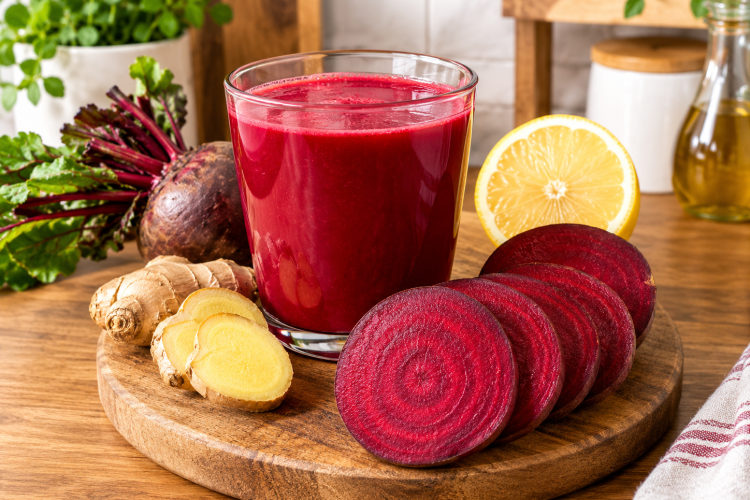
Beetroot and ginger juice is a fresh, colourful drink made with beetroot, apple, carrot, ginger, lemon juice, and water. It combines the natural sweetness of fruit with the earthy flavour of beetroot and a gentle spicy kick from fresh ginger. This easy homemade juice is perfect for breakfast, an afternoon refreshment, or a drink to enjoy as part of your pre-workout routine.
One of the best things about this beetroot juice recipe is how simple it is to prepare. You only need a few fresh ingredients and a blender to create a vibrant drink in approximately eight minutes. The apple and carrot balance the earthy beetroot, while lemon juice adds a bright, citrusy taste. Optional turmeric and black pepper provide extra warmth for those who enjoy a lightly spiced drink.
Beetroot is often associated with exercise performance because it contains naturally occurring nitrates. These compounds can support the body’s production of nitric oxide, which helps blood vessels relax and supports healthy blood flow. Some research suggests that beetroot products may improve exercise efficiency or endurance in certain situations. However, results vary, and homemade beetroot juice should be enjoyed as part of a balanced diet rather than as a guaranteed performance booster.
Why You Will Love This Homemade Juice
Quick and Easy to Make
This fresh beetroot and ginger juice requires very little preparation. After washing and chopping the ingredients, simply add everything to your blender with filtered water and blend until smooth. You can adjust the amount of water to create a thicker or thinner drink, depending on your preference. It is a convenient option for busy mornings when you want something refreshing without spending much time in the kitchen.
Naturally Sweet and Flavourful
Beetroot has a distinctive earthy taste that can be strong when used alone. Apple adds natural sweetness, while carrot contributes a mild, slightly sweet flavour. Fresh ginger gives the juice a warming finish, and lemon balances everything with its citrusy sharpness. Together, these ingredients create a well-rounded drink without the need for added sugar or artificial flavourings.
Suitable for Active Lifestyles
Many people enjoy beetroot juice before running, cycling, or exercising because of its dietary nitrate content. Although the benefits depend on the individual and the amount consumed, beetroot can be a useful addition to a varied eating routine. This recipe also provides an enjoyable way to include more fruit and vegetables in your day, whether you drink it before exercise or simply want a refreshing homemade beverage.
Ingredients for Beetroot and Ginger Juice
Beetroot, Apple, and Carrot
You will need one medium-sized beetroot, one medium-sized apple, and one small carrot. Beetroot provides the juice’s rich red colour and earthy flavour, while apple makes it sweeter and more refreshing. Carrot adds a mild taste and contains beta-carotene, which the body can convert into vitamin A. These three ingredients work together to create a balanced flavour that is enjoyable without additional sweeteners.
Beetroot contains nutrients such as folate and potassium, as well as naturally occurring nitrates. Apples contribute fibre and plant compounds when blended whole, while carrots provide beta-carotene. Wash all three ingredients thoroughly before preparing them. You can peel the beetroot and carrot if you prefer a smoother texture, but leaving the skins on clean produce is also an option.
Fresh Ginger and Lemon
Fresh ginger is an important ingredient because it gives the drink its characteristic spicy warmth. Use a piece measuring approximately four centimetres, or one inch. Peel it with a teaspoon if desired, then cut it into small pieces to help the blender process it evenly. If you enjoy a stronger ginger flavour, you can experiment with the quantity in future batches.
The juice of half a lemon adds a refreshing citrus taste that balances the sweetness of the apple and carrot. It also helps soften the earthy flavour of beetroot. Squeeze the lemon before blending and remove any seeds. Fresh lemon juice works particularly well with ginger because the combination creates a bright, lively flavour.
Turmeric, Black Pepper, and Filtered Water
Turmeric and black pepper are optional ingredients. Use one-eighth of a teaspoon of each if you want a more complex, earthy flavour. Turmeric contains curcumin, while black pepper contains piperine, which can influence curcumin absorption. These spices are not essential to the recipe, so you can leave them out if you prefer a simpler taste.
The recipe also uses one and a half cups of filtered water. Water helps the blender break down the raw vegetables and creates a drinkable consistency. Start with one cup, then gradually add the remaining half cup while blending. Add a little more water if the juice is too thick for your liking.
How to Make Beetroot and Ginger Juice
Step 1: Wash the Ingredients
Wash the beetroot, carrot, apple, and ginger thoroughly under clean running water. Remove any visible dirt before cutting the produce. You can peel the vegetables if you prefer, but make sure they are clean if you plan to leave the skins on. Preparing everything before blending makes the process quicker and helps you work neatly.
Step 2: Prepare the Beetroot and Carrot
Trim the hard end from the beetroot and peel it if desired. Cut it into small chunks and place the pieces in your blender jar. Next, remove the green top from the carrot and chop the carrot into small pieces. Smaller chunks are easier for most household blenders to process, helping create a smoother mixture.
Step 3: Cut the Apple and Ginger
Halve the apple, remove the core and seeds, and cut the remaining fruit into small pieces. Add the apple to the blender with the beetroot and carrot. Scrape the ginger skin away with a teaspoon if you want to peel it, then cut the ginger into smaller pieces. Add the ginger to the other ingredients.
Step 4: Add Lemon and Optional Spices
Squeeze the juice of half a lemon into the blender. Check for seeds before continuing. If you want to include turmeric and black pepper, measure one-eighth of a teaspoon of each and add them to the mixture. These ingredients can enhance the flavour, but the juice will still taste delicious without them.
Step 5: Blend Until Smooth
Pour one cup of filtered water into the blender and secure the lid. Begin blending at a low speed before increasing it as the ingredients start to break down. Gradually add the remaining half cup of water while blending. Continue until the mixture reaches your preferred consistency. Depending on your blender, you may need to pause briefly and scrape down the sides.
Step 6: Adjust and Serve
Check the consistency once the ingredients are blended. If the drink is too thick, add a little extra water and blend again. For a smoother juice, strain the mixture through a fine-mesh sieve. If you prefer to retain more fibre, leave the pulp in the drink. Pour into glasses and serve immediately, adding ice if you enjoy your juice chilled.
Benefits of Beetroot and Ginger Juice
A Source of Dietary Nitrates
Beetroot is widely studied for its dietary nitrate content. The body can convert nitrate into nitric oxide, a compound that helps regulate blood vessel function. This is one reason beetroot juice has attracted interest among runners and other endurance athletes. Some research indicates that nitrate-rich beetroot products may support exercise efficiency, although the results are not the same for everyone.
The amount of nitrate in homemade beetroot juice varies according to the size, variety, and growing conditions of the beetroot. Therefore, this recipe should not be expected to deliver the same effects as a standardised supplement used in a research study. Enjoy it as a fresh drink while maintaining appropriate training, hydration, and nutrition.
Nutrients from Fresh Vegetables
Carrots and beetroot contribute a range of nutrients that support a varied diet. Carrots contain beta-carotene, which the body uses to produce vitamin A. Beetroot supplies folate and potassium, along with other naturally occurring plant compounds. Including different coloured vegetables in meals and drinks can help increase dietary variety and provide a broader range of nutrients.
Blending the vegetables with water also makes them easier to consume in drink form. When you leave the pulp in the finished mixture, more of the original fibre remains. Straining produces a thinner texture but removes some of that fibre, so choose the method that best suits your taste.
Natural Sweetness Without Added Sugar
Apple and carrot give this juice a naturally sweet flavour without requiring extra sugar. The sweetness helps balance beetroot’s earthy taste, making the drink more appealing to people who are new to vegetable juices. Choosing a naturally sweet apple can make the mixture milder, while a tart variety creates a sharper flavour.
Although the recipe contains no added sugar, the fruit and vegetables still contain naturally occurring sugars and carbohydrates. People who need to monitor their carbohydrate intake should consider their portion size and overall dietary needs.
Tips for the Best Results
Choose Fresh Produce
Fresh, firm beetroot, crisp apples, and good-quality carrots generally provide the best flavour. Choose ginger that feels firm and has a fresh aroma. Wash everything thoroughly before blending, and remove any damaged or spoiled sections. Fresh ingredients help produce a juice with a balanced flavour and appealing colour.
Control the Consistency
Add the water gradually rather than pouring it all in at once. This gives you better control over the texture and allows the blender to process the ingredients more easily. If you prefer a thicker drink, use only the amount of water needed to blend the ingredients. For a lighter juice, add extra water after blending.
Keep the Fibre or Strain It
Leaving the blended mixture unstrained preserves more of the fibre from the apple and vegetables. The drink will have a thicker texture, similar to a light smoothie. If you prefer traditional juice, strain it through a fine-mesh sieve and press gently to release the liquid. Both methods work, but they produce different textures and fibre levels.
Easy Variations to Try
Beetroot Juice with Celery
If you prefer a less sweet drink, try replacing the apple with celery. Celery creates a fresher, more savoury flavour that pairs well with beetroot, ginger, and lemon. This variation changes the original recipe, so the final taste and nutritional values will differ. Start with a small batch to see whether you enjoy the new combination.
Beetroot Juice with Pomegranate
Pomegranate can add a fruity, tangy flavour that complements beetroot’s natural sweetness. It also gives the drink a deeper red colour. Add pomegranate as an optional variation when you want something different from the standard recipe. Make sure your blender can handle the seeds, and strain the drink if you prefer a smoother finish.
Notes and Frequently Asked Questions
Can I Make This Juice Without a Juicer?
Yes. A standard blender is sufficient for this recipe. Chop the ingredients into small pieces, add the water, and blend until smooth. You can strain the mixture if you want a thinner consistency, but a dedicated juicer is not necessary.
Can I Drink Beetroot Juice Before Exercise?
You can enjoy this drink before exercise if it suits your stomach and dietary needs. Beetroot’s dietary nitrates have been studied for their potential effects on endurance, but benefits vary between individuals. Try a modest serving first, and avoid drinking a large quantity immediately before a workout if raw vegetables tend to cause digestive discomfort.
Can I Store Leftover Juice?
Freshly blended juice is best enjoyed immediately. If you have leftovers, place them in a clean, airtight container and refrigerate them promptly. For the best flavour and quality, aim to consume them within 24–48 hours. Discard the juice if it develops an unusual smell, appearance, or texture.
Is This Juice Suitable for Everyone?
Many people can enjoy this juice as part of a balanced diet, but individual needs vary. Beetroot contains oxalates and potassium, which may be relevant for people with certain kidney conditions or dietary restrictions. Beetroot may also affect blood pressure, so people taking blood-pressure medication or following specific medical advice should consult a healthcare professional before making regular, substantial changes to their intake.
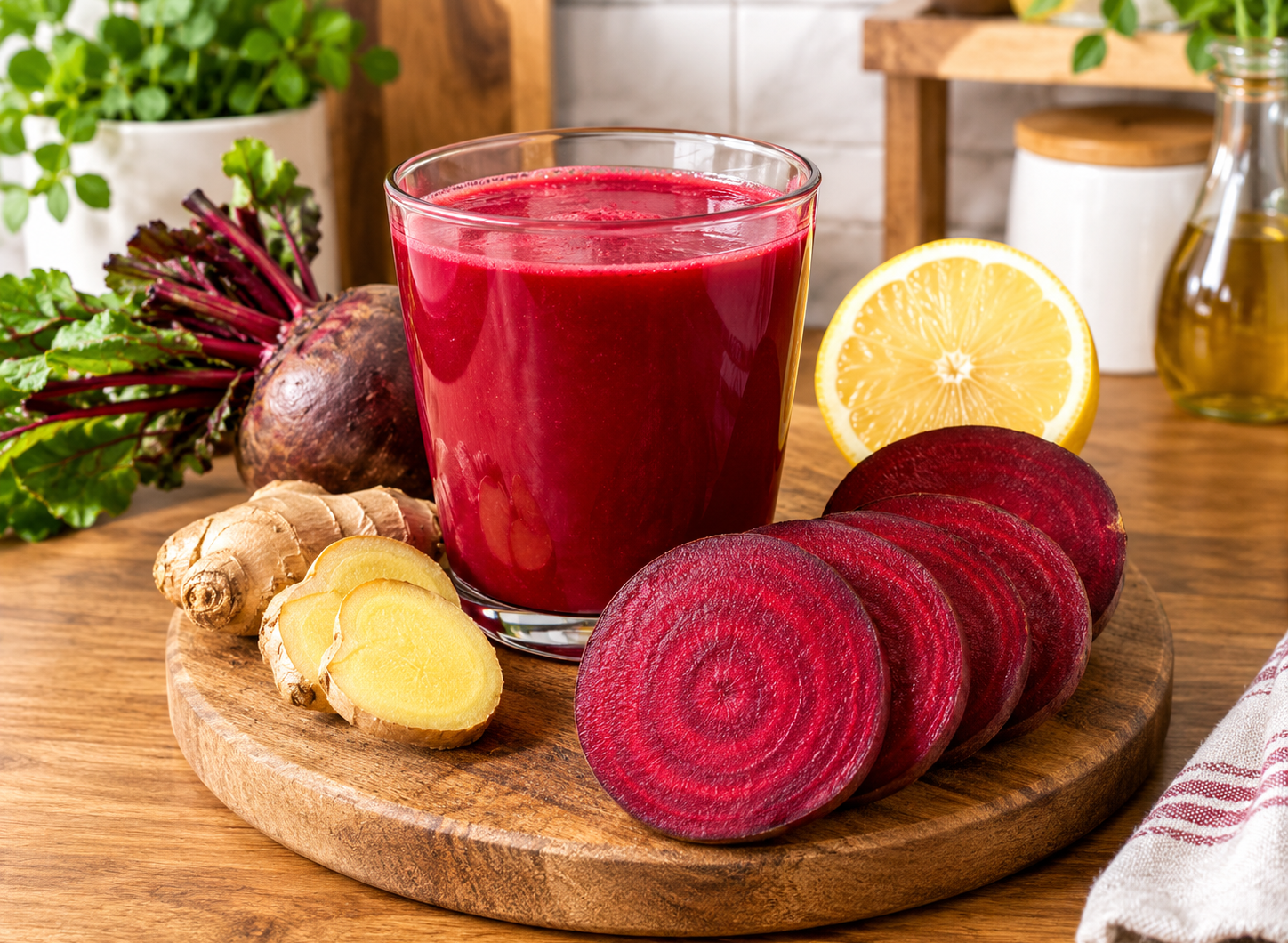
Healthy Natural Beetroot, Ginger and Lemon Drink
A refreshing homemade beetroot juice blended with apple, carrot, fresh ginger, and lemon.
4
servings5
minutes55
kcal3
minutes8
minutesIngredients
1 medium-sized beetroot
1 medium-sized apple
1 small-sized carrot
4 cm or 1 inch fresh ginger
1/2 a lemon, juiced
1/8 tsp black pepper (optional)
1/8 tsp turmeric (optional)
1-1/2 cups filtered water
Directions
- Wash the produce:
Thoroughly wash the beetroot, carrot, apple, and ginger under clean running water. Peel the vegetables if desired. - Prepare the beetroot:
Trim the hard end, peel if preferred, and cut the beetroot into small chunks. - Prepare the carrot:
Remove the green top and cut the carrot into small pieces. - Prepare the apple:
Remove the core and seeds, then chop the apple into chunks. - Prepare the ginger:
Scrape off the skin if desired and cut the ginger into small pieces. - Combine the ingredients:
Place the beetroot, carrot, apple, and ginger in a blender. Squeeze in the juice of half a lemon. - Add optional seasonings:
Add the turmeric and black pepper if using. - Add water and blend:
Pour in one cup of filtered water and blend. Gradually add the remaining half cup while blending until smooth. - Adjust the consistency:
Add a little extra water if needed. Strain through a fine-mesh sieve for a smoother drink, or leave unstrained for more fibre. - Serve:
Pour into glasses and serve immediately, with ice if desired.
Notes
- Use extra water to adjust the juice consistency.
- Peel the vegetables or strain the juice for a smoother texture.
- Serve fresh for the best flavour.
- Store leftovers in an airtight container in the refrigerator for 24–48 hours.
- Turmeric and black pepper are optional.


