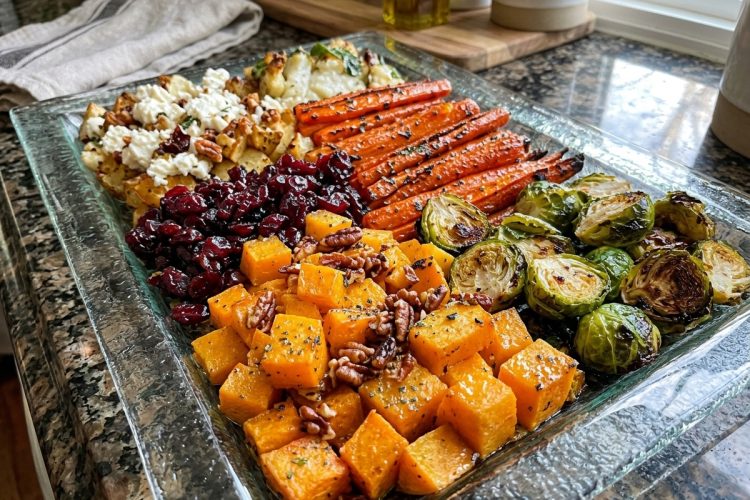
Caramelized butternut squash, carrots, Brussels sprouts, and sweet potatoes make a colorful and flavorful side dish that brings natural sweetness and savory roasted flavor to the dinner table. When vegetables are cooked in a hot oven, their natural sugars develop a deeper taste, their edges become golden, and their centers turn tender. Butternut squash becomes soft and buttery, carrots develop a rich sweetness, Brussels sprouts gain a slightly nutty flavor, and sweet potatoes add a creamy texture that makes every serving satisfying.
This roasted vegetable recipe is a wonderful option for family dinners, weekend meals, Thanksgiving celebrations, and holiday gatherings. The combination of orange, golden, and green vegetables looks beautiful on a serving platter and pairs well with many main courses. Butter and brown sugar give the butternut squash a sweet, sticky coating, while optional ground cinnamon adds warmth. With simple preparation and an oven doing most of the work, this recipe offers a comforting homemade side dish without complicated cooking techniques.
How to Prepare Butternut Squash for Roasting
Peel the Squash Carefully
Preparing a whole butternut squash can seem difficult because the skin is firm and its shape is uneven. Start by placing the squash on a stable cutting board and carefully trimming off both ends. Cut the squash into manageable sections, then place each section on its flat side before removing the skin. A sturdy vegetable peeler is useful, while a sharp knife can also remove the peel when handled carefully.
Keeping the squash stable is important during preparation. Avoid trying to peel a whole squash while it rolls around on the counter. Instead, work with smaller sections and keep your hands away from the cutting path. Once the skin has been removed, cut the wider bottom section in half and scoop out the seeds and stringy material. The remaining flesh is ready to be sliced and cubed for roasting.
Cut the Squash into Even Cubes
After peeling and removing the seeds, cut the squash into approximately one-inch cubes. Begin by slicing the flesh into manageable sections before cutting those sections into smaller pieces. The cubes do not need to be perfectly identical, but keeping them close in size helps them cook at a similar rate. This is especially important when the squash is being prepared for a side dish where tenderness and browning should be consistent.
As the squash roasts, the cubes may shrink slightly and develop more concentrated flavor. Their surfaces become coated with the melted butter and brown sugar, while the centers soften. Even-sized cubes make it easier to turn the pieces during cooking and help prevent smaller pieces from becoming overly soft while larger pieces remain firm. Taking a few extra minutes to cut the squash properly can improve the overall texture of the finished dish.
How to Make Caramelized Butternut Squash, Carrots, Brussels Sprouts & Sweet Potato
Preheat the Oven
Preheat the oven to 375°F (190°C). Prepare a large baking sheet by lining it with parchment paper or using a nonstick baking sheet. Parchment paper makes cleanup easier because the brown sugar glaze can become sticky during roasting. Position the oven rack near the center so the squash receives steady heat and has enough time to soften without browning too quickly on the outside.
Allow the oven to reach the correct temperature before placing the squash inside. Starting with a properly heated oven makes the cooking process more predictable and helps the sugar begin caramelizing at the right pace. If you are preparing other vegetables for the same meal, cut them before cooking so everything is ready when you begin assembling the tray. Remember that the supplied recipe specifies 375°F for the butternut squash.
Coat the Squash with Melted Butter
Place the cubed butternut squash in a large mixing bowl and pour the four tablespoons of melted butter over it. Toss the cubes gently with a large spoon or spatula until they are evenly coated. This step helps the butter reach the surface of each piece, providing richness and helping the brown sugar stick during the next stage of preparation.
Take a moment to check the bottom of the bowl before adding the sugar. If most of the butter has collected underneath the cubes, toss the mixture again to distribute it more evenly. A consistent coating helps the squash roast with a more uniform appearance and flavor. Handle the cubes gently so they retain their shape and are easy to spread across the baking sheet.
Add the Brown Sugar and Cinnamon
Add one-third cup of brown sugar to the butter-coated squash and toss until the cubes are covered. The sugar may collect in small patches at first, but continued gentle mixing helps distribute it across the surface. This combination creates the sweet coating that will melt and caramelize in the oven. If you are using cinnamon, sprinkle half a teaspoon over the cubes and toss lightly to spread the spice evenly.
The brown sugar and butter should coat the squash without leaving every piece submerged in excess liquid. Once the cubes are prepared, transfer them to the lined baking sheet. Use a spatula to scrape any remaining sugar mixture from the bowl onto the squash. This helps preserve the intended flavor and reduces waste while ensuring the cubes receive the coating needed for caramelization.
Arrange the Squash on the Baking Sheet
Spread the coated squash cubes in a single layer on the prepared baking sheet. Leave a little space between pieces so the hot air can circulate around them. If the cubes are crowded together, moisture may become trapped, causing them to soften before their surfaces have a chance to brown. Using a sufficiently large baking sheet helps the squash develop the sticky, golden coating that makes this recipe distinctive.
If you are preparing carrots, Brussels sprouts, and sweet potatoes as part of the larger vegetable combination, arrange them with enough room for roasting. However, the original instructions do not specify quantities or a combined cooking method for those vegetables. They may need separate preparation and timing to ensure that the firmer pieces become tender without overcooking the softer squash. Avoid assuming that all four vegetables will finish at exactly the same time.
Roast Until Tender and Caramelized
Place the baking sheet on the center rack of the oven and roast the squash for 45 to 50 minutes. Turn the cubes approximately every 15 minutes to expose different sides to the heat. This helps the pieces brown more evenly and prevents the sugar coating from becoming too dark in one area. If your oven cooks unevenly, rotate the baking sheet during roasting so the cubes receive more consistent heat.
Check the squash toward the end of the cooking time. The centers should be tender when pierced with a fork, and the outside should have a glossy, sticky appearance. Some edges may become slightly crisp, while the interior remains soft and buttery. If the cubes are still firm, allow them to roast for a little longer and check again. Use their tenderness and color to determine when they are ready.
For the full four-vegetable combination, check the carrots, Brussels sprouts, and sweet potatoes separately for doneness. Their size and texture can affect how quickly they cook. Brussels sprouts may develop browned cut surfaces, carrots may need additional time depending on their thickness, and sweet potatoes should be tender without falling apart. Because their quantities and timings were not included in the original recipe, adjust their roasting separately rather than changing the specified squash ingredients.
Cool Slightly Before Serving
Remove the baking sheet from the oven once the squash is tender and caramelized. Let it rest briefly before serving because the melted sugar coating can be extremely hot. During this short cooling period, the glaze may become slightly firmer while the inside remains tender. This gives the cubes a pleasant contrast between their soft centers and sticky outer surfaces.
Transfer the roasted squash to a serving dish using a spatula, taking care not to break the cubes apart. Arrange the pieces loosely so the caramelized coating remains visible. If serving with other roasted vegetables, combine them gently just before bringing the platter to the table. The different colors create an attractive presentation, making this side dish suitable for both casual family dinners and special holiday meals.
Tips for Perfectly Roasted and Caramelized Vegetables
Cut the Vegetables into Similar Sizes
Consistent cutting helps vegetables roast more evenly. Aim for approximately one-inch cubes for the butternut squash, and cut the sweet potatoes into similar-sized pieces if using them. Carrots should be cut into manageable chunks, while Brussels sprouts can be halved or quartered depending on their size. These adjustments help reduce the difference between vegetables that cook quickly and those that need more time.
The pieces do not have to be perfectly uniform, but very large and very small pieces should not be mixed without considering their cooking times. Smaller pieces expose more surface area to the heat and can brown faster, while larger pieces take longer for their centers to soften. Paying attention to size helps you achieve tender vegetables with attractive roasted edges instead of a mixture of overcooked and undercooked pieces.
Avoid Overcrowding the Baking Sheet
Giving the vegetables enough space is one of the most important steps for good roasting. When the pieces are packed tightly together, moisture can collect around them, preventing the surfaces from browning properly. Instead of developing golden edges, the vegetables may become soft and appear steamed. Spread the pieces across the tray in a single layer and use another baking sheet if necessary.
This advice is especially helpful when cooking for a larger family or preparing a holiday meal. A larger batch may require more oven space, but dividing the vegetables between trays can produce better results than squeezing everything onto one pan. If using multiple trays, check them during cooking because their positions in the oven may affect how quickly the vegetables brown.
Turn the Vegetables During Roasting
Turning the squash every 15 minutes helps the cubes develop color on multiple sides. Use a spatula to move the pieces gently, particularly toward the end of cooking when they become soft. Rotating the baking sheet can also help if one side of your oven is hotter than the other. These simple adjustments encourage even browning and reduce the chance of the brown sugar coating becoming too dark in one area.
For Brussels sprouts, positioning some of the cut sides against the baking sheet can help them develop a golden surface. Carrots and sweet potatoes also benefit from occasional turning, although their ideal cooking times may differ from the squash. Check each vegetable as it cooks and remove pieces that are ready before the others if necessary. This approach is useful when you want a mixed platter with distinct textures rather than vegetables that have all become overly soft.
Frequently Asked Questions
Can I Make Caramelized Butternut Squash Without Cinnamon?
Yes, cinnamon is optional in the original recipe. You can leave it out if you prefer the straightforward flavor of butternut squash, melted butter, and brown sugar. The squash will still develop a sweet, sticky glaze as it roasts. Cinnamon simply adds a warm aroma that complements the squash, making it a pleasant option for autumn and winter meals without being necessary for successful caramelization.
Why Are My Vegetables Not Browning?
Vegetables may not brown properly if the baking sheet is overcrowded, the pieces are wet, or the oven has not reached the correct temperature. Dry the vegetables after washing, spread them out in a single layer, and allow enough space for hot air to circulate. Turning the pieces during cooking also helps them develop color. If roasting several vegetables together, check each type separately because they may not finish at the same time.
How Do I Know When the Squash Is Ready?
The butternut squash is ready when the cubes are tender in the center and the brown sugar coating has become sticky and caramelized. A fork should pass through the flesh easily, while the outside should show golden or lightly browned areas. The original cooking time is 45 to 50 minutes at 375°F, with turning approximately every 15 minutes. Larger cubes may need extra time, so check their texture before removing them from the oven.
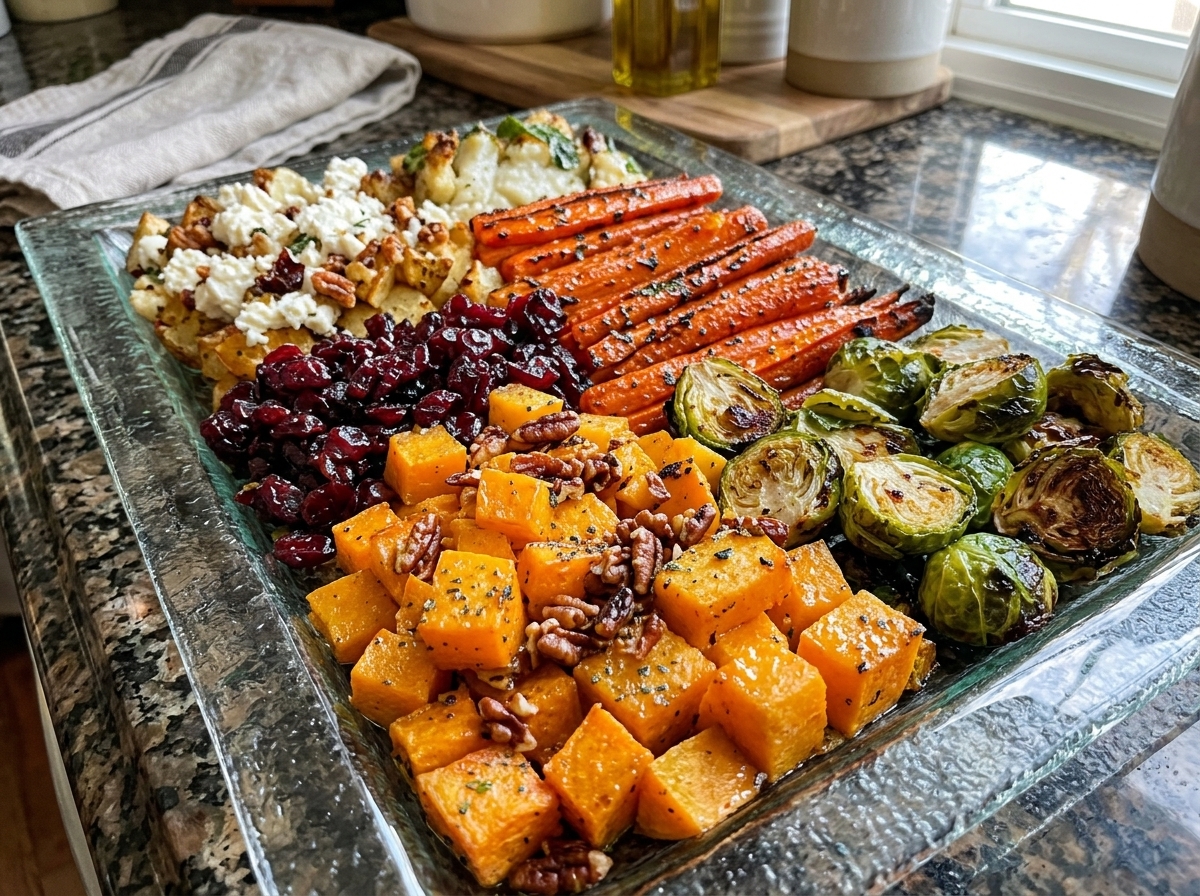
Healthy Caramelized Butternut Squash, Carrots, Brussels Sprouts & Sweet Potato
Tender butternut squash coated in melted butter and brown sugar, roasted until golden and caramelized.
6
servings10
minutes50
minutes1
hourIngredients
1 large butternut squash, peeled, seeds removed, and cubed
4 tablespoons butter, melted
1/3 cup brown sugar
1/2 teaspoon ground cinnamon (optional)
Directions
- Preheat the Oven
Preheat the oven to 375°F (190°C). Line a baking sheet with parchment paper or use a nonstick baking sheet. - Prepare the Butternut Squash
Peel the squash, remove the seeds, and cut the flesh into approximately one-inch cubes. - Coat with Melted Butter
Place the squash cubes in a large bowl. Add the melted butter and toss until all the pieces are evenly coated. - Add the Brown Sugar
Add the brown sugar and toss again until the cubes are well coated. - Add the Cinnamon
Sprinkle the optional ground cinnamon over the squash and mix gently to distribute it evenly. - Arrange on the Baking Sheet
Spread the coated squash cubes in a single layer on the prepared baking sheet. - Roast Until Caramelized
Bake on the center rack for 45–50 minutes, turning the cubes approximately every 15 minutes. Rotate the baking sheet if necessary to encourage even browning. - Cool and Serve
Remove the squash when the centers are tender and the brown sugar coating is sticky and caramelized. Allow it to cool slightly before serving.


