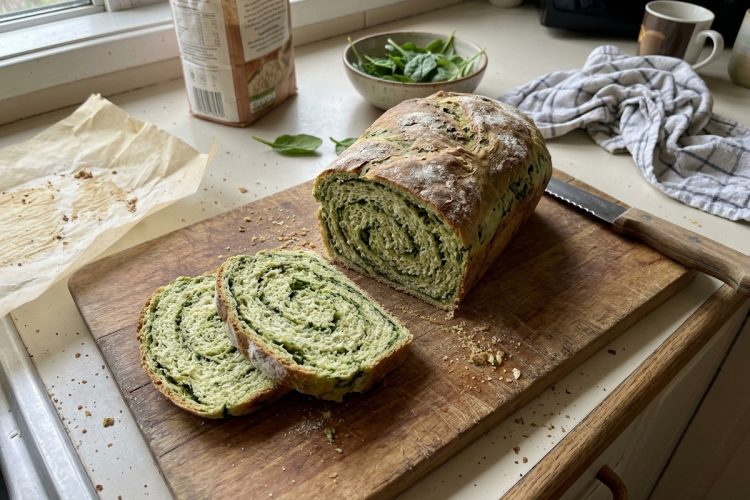
Homemade spinach and herb green bread is a delicious way to add fresh flavor, natural color, and variety to your everyday baking. Made with fresh baby spinach, Italian parsley, basil, garlic, and soft yeast dough, this homemade bread has a vibrant green interior and a golden-brown crust. Its tender texture and mild herbal flavor make it perfect for breakfast toast, sandwiches, brunch spreads, and savory snacks.
Unlike commercially colored bread, this spinach bread gets its beautiful green color from fresh vegetables and herbs blended directly into the dough. Spinach provides the distinctive shade, while parsley, basil, and garlic create a delicious savory aroma. Milk, butter, and egg help keep the bread soft and tender, making every slice suitable for both simple toppings and hearty sandwich fillings.
What Makes Spinach and Herb Green Bread Special?
Naturally Green Bread
The standout feature of this green bread recipe is its naturally vibrant color. Fresh baby spinach, parsley, basil, warm milk, and melted butter are blended into a smooth puree before being mixed with the flour. This technique distributes the color throughout the loaf, creating an attractive green crumb without artificial food coloring.
The fresh herbs provide a gentle savory flavor that works well with a variety of meals. Garlic adds extra depth, while the enriched dough creates a soft texture with a lightly crisp crust. This homemade spinach bread is a creative alternative to ordinary white bread and a beautiful addition to family meals or special brunch gatherings.
Soft Interior and Golden Crust
A successful homemade loaf should have a tender interior without becoming dense or gummy. Milk, butter, and egg enrich the dough, while yeast creates the air pockets needed for a light texture. Kneading develops the dough’s structure, and allowing it enough time to rise helps the loaf expand before baking.
The spinach puree adds moisture, so the dough may feel slightly tacky during kneading. This is normal and does not mean you need to add large amounts of flour. Too much additional flour can make the bread dry and heavy. Keeping the dough soft and allowing it to cool completely after baking will help produce attractive slices.
Why You Will Love This Green Bread Recipe
Versatile for Everyday Meals
Spinach herb bread is ideal for grilled cheese, turkey sandwiches, egg sandwiches, and avocado toast. Its mild herbal flavor complements cheese, eggs, roasted vegetables, and other savory fillings. Serve it beside soup for lunch or slice it onto a brunch board with butter, spreads, and fresh vegetables.
The bright green interior also makes this bread visually appealing when served to guests. You can use it for everyday meals or prepare it for gatherings when you want something different from traditional sandwich bread. Its familiar texture makes it easy to enjoy with a wide range of toppings.
Made with Fresh Ingredients
Fresh spinach, Italian parsley, and basil provide the color and distinctive flavor of this recipe. Blending them into the liquid ingredients helps distribute the greens evenly throughout the dough. The result is a smooth, consistent crumb without large pieces of leaves scattered through the loaf.
Spinach adds vegetables to a familiar baked food, while the herbs create a fresh aroma. However, the bread is still a bread-based food rather than a substitute for a varied selection of vegetables. Enjoy it as part of balanced meals with your preferred fillings and sides.
Convenient for Freezing
Homemade bread is easier to manage when you can freeze portions for later. Once the loaf has cooled completely, slice it and store the slices in a freezer-safe bag. You can remove individual portions whenever needed and toast them directly from frozen, making breakfast and lunch preparation more convenient.
Equipment Needed
Essential Baking Tools
You will need a blender or food processor to puree the spinach, parsley, basil, milk, and butter. A saucepan helps warm the milk and melt the butter, while a large mixing bowl provides room to combine and knead the dough. A wooden spoon or dough whisk is useful for mixing the ingredients before kneading.
A standard 9×5-inch loaf pan gives the bread its traditional shape. Keep plastic wrap or a clean kitchen towel nearby to cover the dough during rising, and use a wire rack to cool the finished loaf. An instant-read thermometer is helpful for checking that the center has baked completely.
Ingredients for Spinach and Herb Bread
Spinach and Herb Mixture
This recipe uses two packed cups of fresh baby spinach, approximately 60 grams, half a cup of fresh Italian parsley leaves, approximately 15 grams, and a quarter cup of fresh basil leaves, approximately 10 grams. Wash the greens thoroughly and remove any tough stems before blending.
The liquid mixture includes three-quarters of a cup of whole milk, two tablespoons of unsalted butter, and two teaspoons of honey or granulated sugar. Reserve one additional tablespoon of milk for brushing the loaf before baking. One large egg, preferably at room temperature, enriches the dough and contributes to its soft texture.
Flour, Yeast, Salt, and Garlic
Use three and one-quarter cups of all-purpose flour, approximately 400 grams, two and one-quarter teaspoons of instant yeast, and one and one-half teaspoons of kosher salt. Two cloves of finely minced or grated garlic are optional but recommended for additional savory flavor.
You can replace up to one cup of the all-purpose flour with bread flour if you prefer a chewier texture. Measure the flour carefully and add it gradually because flour absorption varies. Keep additional flour to a minimum so the finished loaf stays tender.
How to Make Spinach and Herb Green Bread
Step 1: Prepare the Green Puree
Place the milk, butter, and honey or sugar in a small saucepan. Warm gently over low heat until the butter melts and the liquid reaches approximately 110°F to 115°F. Do not allow the mixture to become excessively hot, as high temperatures can damage the yeast.
Transfer the warm mixture to a blender with the spinach, parsley, and basil. Blend until completely smooth, with no large pieces of leaves remaining. Pour the green puree into a large mixing bowl and make sure it is comfortably warm before adding the yeast.
Step 2: Mix the Wet Ingredients
Sprinkle the instant yeast over the green puree and whisk gently. Let the mixture stand for approximately five minutes, keeping the temperature below 115°F. Add the egg and minced garlic, whisking until everything is evenly combined.
The mixture should have a consistent green color and a fresh herbal aroma. Preparing the wet ingredients thoroughly helps distribute the herbs throughout the dough. Measure the flour and salt before moving to the next step so they can be incorporated smoothly.
Step 3: Combine and Knead the Dough
In a separate bowl, whisk together the flour and salt. Gradually add the dry ingredients to the green mixture, stirring until a rough dough forms. Use your hands when the mixture becomes too thick to stir, bringing together any remaining dry flour from the bottom of the bowl.
Transfer the dough to a lightly floured surface and knead for eight to ten minutes until smooth, elastic, and slightly tacky. If using a stand mixer, knead with a dough hook for approximately six to eight minutes. Add extra flour one tablespoon at a time only if the dough is excessively sticky.
Step 4: Let the Dough Rise
Lightly grease a large bowl and place the kneaded dough inside. Turn it once to coat the surface lightly, then cover the bowl with plastic wrap or a clean kitchen towel. Leave it in a warm, draft-free place for approximately one to one and a half hours, or until doubled in size.
Rising time depends on the temperature of your kitchen, so use the dough’s appearance as your main guide. You can also refrigerate the dough overnight during the first rise for a more flexible schedule. Allow chilled dough to warm slightly before shaping it.
Step 5: Shape the Loaf
Grease a 9×5-inch loaf pan with butter or cooking spray. Gently press down the risen dough to release excess air, then transfer it to a lightly floured surface. Pat it into a rectangle approximately nine inches wide and roll it into a log.
Pinch the seam closed, tuck the ends underneath, and place the dough seam-side down in the prepared pan. Cover loosely and allow it to rise for another 45 minutes to one hour, until it sits approximately one inch above the rim. Preheat the oven to 375°F (190°C) before the second rise finishes.
Step 6: Bake the Bread
Brush the top of the dough gently with the reserved tablespoon of milk. Place the pan on the center rack of the preheated oven and bake for 40 to 45 minutes. The crust should become golden brown, and the loaf should feel firm when removed from the oven.
For the most reliable result, check the center with an instant-read thermometer. The internal temperature should reach approximately 200°F (95°C). If the crust darkens too quickly, pay attention to the internal temperature rather than relying on color alone.
Step 7: Cool and Slice
Remove the loaf from the pan and transfer it to a wire rack. Let it cool completely for at least one to two hours before slicing. Cutting the bread while it is hot can compress the crumb and make the slices appear gummy.
Use a sharp serrated bread knife to cut even slices. The finished bread should have a soft green interior and an attractive golden crust. Serve it fresh, toast it for breakfast, or use it for sandwiches and savory snacks.
Serving Ideas for Green Bread
Breakfast and Lunch
Serve spinach bread toasted with butter, scrambled eggs, mashed avocado, or melted cheese. It also pairs well with omelets and roasted vegetables, making it a useful addition to a savory breakfast. For brunch, arrange slices on a serving board alongside cheese, fresh vegetables, and spreads.
At lunchtime, use the bread for grilled cheese, turkey sandwiches, or vegetable sandwiches. Its mild herbal flavor complements crisp vegetables and creamy fillings without overpowering them. You can also serve it alongside tomato soup, vegetable soup, or a fresh salad for a satisfying meal.
Garlic Pull-Apart Bread
For a different presentation, shape the dough into twelve equal portions instead of making a standard loaf. Roll each portion into a ball, dip it in garlic butter, and arrange the pieces in a bundt pan. This creates a shareable pull-apart bread that works well for family meals and gatherings.
Because the shape and baking pan differ from the original recipe, the baking time may change. Check that the center is completely cooked before serving.
Storage and Freezing Instructions
Storing Homemade Bread
Allow the loaf to cool completely before placing it in an airtight container or bread bag. Store it at room temperature for approximately three to four days, away from direct sunlight and heat. Avoid sealing warm bread because trapped steam can make the crust damp and the interior sticky.
Slice only what you need to help the remaining loaf retain its texture. If the bread becomes slightly dry, toasting can improve its texture. Check the loaf before eating and discard it if you notice mold or an unusual smell.
Freezing Spinach Bread
To freeze the bread, allow it to cool completely and slice it into portions. Place parchment paper between the slices so they are easier to separate, then transfer them to a freezer-safe bag or airtight container. Remove excess air before sealing to help protect the bread from freezer burn.
When needed, take out individual slices and place them directly in the toaster, or thaw them before making sandwiches. Label the bag with the date to help manage storage. Freezing individual portions reduces waste and allows you to enjoy homemade spinach bread whenever you need it.
Helpful Tips for the Best Results
Keep the Dough Soft
The spinach puree contributes moisture, and different flour brands absorb liquid differently. Add the flour gradually and knead until the dough becomes elastic. Slight tackiness is normal, so avoid adding too much flour simply to make the dough easier to handle.
Check the Yeast Temperature
Keep the milk and butter mixture warm rather than hot before adding the yeast. Temperatures around 110°F to 115°F are suitable for preparing the liquid mixture. Check the yeast’s expiration date if the dough does not rise as expected.
Blend the Herbs Thoroughly
Blend the spinach, parsley, and basil until smooth to achieve an evenly colored crumb. Large pieces of leaves can create uneven patches and make the dough harder to handle. Thoroughly washed, fresh greens provide the best starting point for this recipe.
Frequently Asked Questions
Does Spinach Bread Taste Strongly of Spinach?
The spinach provides a mild vegetable flavor, while parsley, basil, and garlic give the loaf its savory character. Milk, butter, and egg balance the herbs, producing bread that works well with familiar sandwich fillings and breakfast toppings.
Why Is My Green Bread Dense?
Dense bread can result from inactive yeast, insufficient kneading, inadequate rising time, or too much flour. Knead until the dough becomes elastic and allow it to rise until doubled. Give the shaped loaf enough time for its second rise before baking.
Can I Prepare the Dough Ahead of Time?
Yes. Refrigerating the dough overnight during the first rise is a convenient option. Allow the chilled dough to warm slightly before shaping, then complete the second rise and bake as directed. Rising times may vary depending on the dough temperature and kitchen conditions.
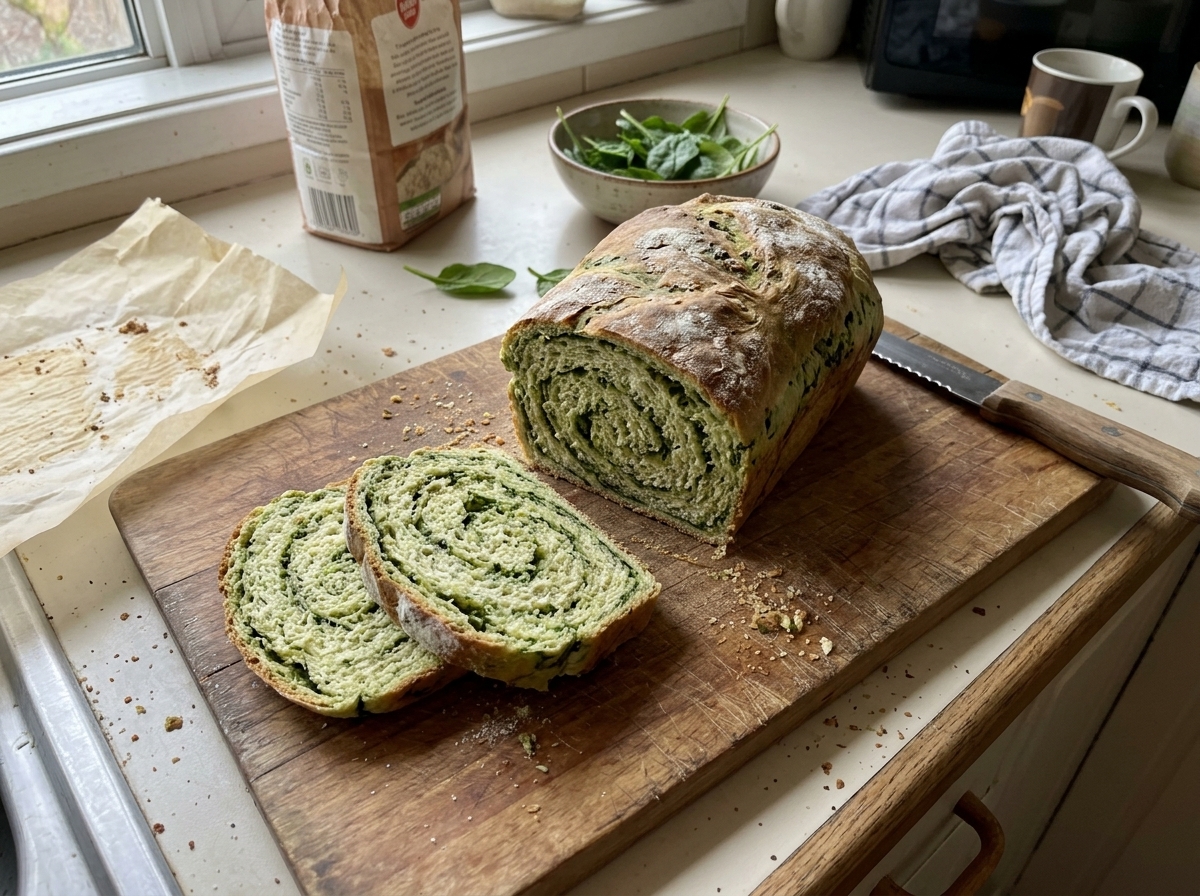
Easy Homemade Green Bread Loaf
A soft, savory homemade bread made with fresh spinach and herbs, featuring a vibrant green interior and a golden-brown crust.
1
servings25
minutes45
minutes150
kcal90
minutes2
hours40
minutesIngredients
2 packed cups fresh baby spinach (approximately 60 g), washed and tough stems removed
½ cup fresh Italian parsley leaves (approximately 15 g)
¼ cup fresh basil leaves (approximately 10 g)
¾ cup whole milk, plus 1 tablespoon extra for brushing
2 tablespoons unsalted butter, cut into cubes
2 teaspoons honey or granulated sugar
1 large egg, at room temperature
3¼ cups all-purpose flour (approximately 400 g)
2¼ teaspoons instant yeast (1 standard 7 g packet)
1½ teaspoons kosher salt
2 cloves garlic, finely minced or grated into a paste (optional)
Directions
- Warm the milk:
Heat the milk, butter, and honey or sugar in a small saucepan over low heat until the butter melts and the mixture reaches approximately 110°F–115°F. - Blend the greens:
Blend the warm milk mixture with the spinach, parsley, and basil until completely smooth and bright green. - Combine the wet ingredients:
Transfer the puree to a large bowl, sprinkle in the instant yeast, and let it stand for 5 minutes. Whisk in the egg and minced garlic. - Mix the dough:
In another bowl, combine the flour and salt. Gradually add the dry mixture to the green puree, stirring until a rough dough forms. - Knead:
Knead on a lightly floured surface for 8–10 minutes until smooth, elastic, and slightly tacky. Alternatively, use a stand mixer with a dough hook for 6–8 minutes. - First rise:
Place the dough in a lightly greased bowl, cover, and let it rise in a warm place for 1–1½ hours, or until doubled in size. - Shape the loaf:
Grease a 9×5-inch loaf pan. Gently deflate the dough, shape it into a rectangle, roll it into a log, pinch the seam closed, and place it seam-side down in the pan. - Second rise:
Cover loosely and let the dough rise for 45–60 minutes, until it reaches approximately 1 inch above the pan rim. - Preheat and brush:
Preheat the oven to 375°F (190°C). Brush the top of the loaf with the reserved tablespoon of milk. - Bake:
Bake for 40–45 minutes until golden brown and the internal temperature reaches approximately 200°F (95°C). - Cool and slice:
Remove the bread from the pan and cool on a wire rack for at least 1–2 hours before slicing.
Nutrition Facts
- Calories: 150kcal
- Fat: 3g
- Carbohydrates: 26g
- Sugar: 3g
- Protein: 5g


