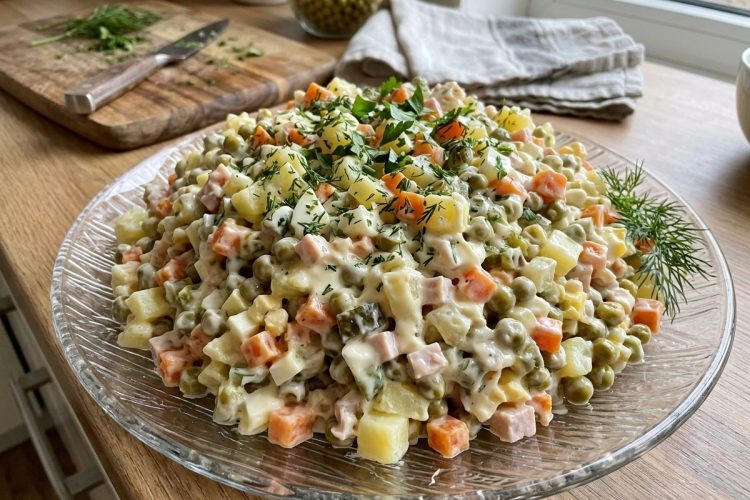
Olivier Salad, widely known as Russian Salad, is a classic dish loved throughout Eastern Europe and many other parts of the world. Made with tender potatoes, sweet carrots, green peas, smoked ham, hard-boiled eggs, crunchy dill pickles, and a creamy homemade dressing, this traditional salad brings together a wonderful combination of flavors and textures. Every bite offers something different, from the softness of the cooked vegetables to the savory ham and the refreshing taste of fresh herbs.
This Olivier Salad recipe is an excellent choice for family dinners, holiday celebrations, potlucks, picnics, and special occasions. It is filling enough to serve as a light meal but also works beautifully as a side dish alongside roasted meats, grilled chicken, or other main courses. The creamy dressing brings all the ingredients together, while Dijon mustard, Worcestershire sauce, and fresh dill give the salad an extra layer of flavor that makes it stand out from an ordinary potato salad.
What Is Olivier Salad?
The History Behind Russian Salad
Olivier Salad is a traditional Russian dish with a history that goes back more than 150 years. It was originally created during the 1860s by Lucien Olivier, a chef who worked at the famous Hermitage restaurant in Moscow. At that time, the restaurant was known for its luxurious dining experience, and Olivier’s signature salad quickly became one of its most popular dishes among wealthy customers and visitors.
The original version was considerably more elaborate than the Russian potato salad commonly prepared today. It included expensive ingredients such as hazel grouse, veal tongue, caviar, crayfish tails, aspic, capers, olives, potatoes, and lettuce. These ingredients were arranged with great care and served with a special creamy sauce that made the dish particularly memorable. The exact original dressing was kept secret, which helped build the salad’s reputation.
As the recipe became more popular, other chefs tried to recreate it, but they struggled to reproduce the distinctive flavor of Olivier’s dressing. Over the years, the expensive ingredients gradually disappeared from everyday versions of the recipe. More affordable ingredients, including cooked chicken, ham, boiled eggs, green peas, and pickled cucumbers, became common replacements.
Today, Olivier Salad has become a familiar part of celebrations throughout Russia and Eastern Europe. Although the ingredients have changed considerably since its creation, the combination of diced vegetables, protein, pickles, and creamy dressing remains central to the dish.
How Olivier Salad Became Popular Around the World
One reason Olivier Salad has remained popular for so long is its flexibility. Different countries and households have developed their own versions using ingredients that are readily available in their kitchens. Some recipes include cooked beef, while others use chicken, sausage, or fish. Vegetables and additional ingredients also vary depending on local preferences and traditions.
In Romania, chopped beef is sometimes used instead of ham, while Bulgarian versions commonly include salami. Croatian preparations may include diced apples for a slightly sweet flavor. In Turkey, pickled beets can be added, and some Polish variations include pickled herring. In Spain, a related dish called ensaladilla rusa is often prepared with tuna.
These variations show how easily the salad can adapt to different tastes while maintaining its recognizable character. The version in this recipe combines traditional everyday ingredients with a few flavorful additions, including capers and Worcestershire sauce. Together, they create a satisfying Russian Salad that respects the dish’s history while remaining practical for modern home cooking.
This Olivier Salad Recipe
A Wonderful Combination of Flavors
The appeal of Olivier Salad comes from the balance of its ingredients. Potatoes provide a soft, hearty base, carrots bring natural sweetness, and green peas add small bursts of freshness. Smoked ham contributes a savory flavor, while hard-boiled eggs create a rich texture that blends beautifully with the creamy mayonnaise dressing.
Dill pickles provide an important contrast because their tangy flavor prevents the salad from tasting too heavy. Dijon mustard and Worcestershire sauce add extra depth, while fresh dill gives the finished dish a pleasant herbal taste. Each ingredient has a purpose, and together they create a salad that is flavorful without requiring complicated cooking techniques.
Perfect for Holidays and Family Gatherings
Russian Salad is especially popular during celebrations because it can be prepared in a large batch and served to several people. The ingredients are easy to find, and most of the preparation involves simple boiling, chopping, mixing, and chilling. This makes it a convenient recipe when you are preparing several dishes for a holiday meal or hosting guests.
It is also a practical choice for potlucks and family gatherings because it can be served cold. You can prepare the vegetables, eggs, ham, and dressing ahead of time, making the final assembly much easier. Once chilled, the flavors have time to come together, creating an even more enjoyable salad.
Easy to Customize
Although this recipe uses smoked ham, there are several ways to adapt the protein according to your preferences. Cooked chicken, rotisserie chicken, and European bologna are suitable alternatives. You can also leave out the meat for a vegetarian version, although the final nutritional values will be different.
The vegetables can also be adjusted with optional ingredients such as sweet corn, yellow bell pepper, or diced cucumber. These additions provide different textures and flavors without changing the overall character of the salad. This flexibility makes Olivier Salad a useful recipe to keep in your collection.
Tips for Making the Best Russian Salad
Choose Potatoes That Hold Their Shape
The type of potato you use can make a significant difference to the final result. Firm yellow potatoes are a reliable choice because they remain intact after cooking and mixing. Avoid overcooking them, even if you prefer a softer potato salad, because the ingredients should remain recognizable in traditional Olivier Salad.
Drain Every Ingredient Properly
Excess moisture is one of the most common reasons a creamy salad becomes watery. Drain the potatoes, carrots, peas, and capers thoroughly before combining them. Dill pickles can also release liquid after chopping, so allow them to drain before adding them to the bowl.
Cut Ingredients Into Even Pieces
Consistent chopping helps the salad look attractive and ensures that the flavors are evenly distributed. The potatoes and ham should be cut into approximately half-inch cubes, while carrots, onions, and pickles can be smaller. This creates a balanced texture without allowing one ingredient to overwhelm the others.
Adjust the Dressing Carefully
The dressing should coat the ingredients without making the salad excessively wet. Begin with the listed quantities and mix everything together before deciding whether any adjustment is needed. Different potato varieties and preparation methods can affect how much dressing the salad absorbs.
Make-Ahead Preparation and Storage
Preparing Olivier Salad in Advance
Olivier Salad is a convenient recipe for preparing ahead of time, particularly when you are planning a holiday meal or entertaining guests. You can cook the potatoes and carrots, prepare the eggs, chop the ham, and measure the remaining ingredients up to one day in advance.
For the best texture, keep the prepared components refrigerated in separate covered containers. You can also prepare the dressing ahead of time and store it separately. Combining the dressing with the salad a couple of hours before serving helps preserve the texture and freshness of the ingredients.
How to Store Leftover Russian Salad
Transfer leftover Olivier Salad into an airtight container and refrigerate it promptly. When stored properly at a refrigerator temperature of 40°F (4°C) or below, the salad can generally be enjoyed within three to four days.
Because this recipe contains mayonnaise, sour cream, eggs, and cooked ham, it should not be left at room temperature for extended periods. If serving it at a gathering, keep the bowl chilled and return leftovers to the refrigerator promptly. Discard the salad if it has been left out for more than two hours, or one hour when temperatures exceed 90°F (32°C).
Different Ways to Serve Olivier Salad
Serve It as a Traditional Side Dish
The simplest way to serve Olivier Salad is in a large bowl with a little fresh dill or parsley on top. It pairs well with roasted chicken, grilled meat, baked fish, and other savory main dishes. Its creamy texture and refreshing pickle flavor provide a pleasant contrast to warm, roasted foods.
Make an Attractive Party Presentation
For a more elegant presentation, you can shape the salad using a small measuring cup or food mold. Lightly coat the inside of the mold with oil, fill it with the prepared salad, and gently press the mixture into place. Turn the mold upside down over a serving plate and carefully lift it away.
If the salad is too loose, slightly reducing the mayonnaise may help it hold its shape. The final consistency depends on the potatoes, how thoroughly the vegetables were drained, and how long the salad has been chilled. Garnish with fresh dill or parsley for a simple finishing touch.
Frequently Asked Questions About Olivier Salad
Is Olivier Salad the Same as Russian Salad?
Yes. Olivier Salad is commonly known as Russian Salad because it originated in Moscow and became one of Russia’s best-known traditional dishes. The names are often used interchangeably, although ingredients and preparation methods vary between countries and households.
Can I Make Olivier Salad Without Ham?
Yes. You can replace the smoked ham with cooked chicken or European bologna. For a vegetarian version, simply leave out the meat. The remaining vegetables, eggs, pickles, and creamy dressing still create a satisfying salad.
Can I Use Greek Yogurt Instead of Sour Cream?
Yes. Plain Greek yogurt can replace sour cream in the dressing. It provides a similar creamy texture with a slightly different tangy flavor. Choose unsweetened Greek yogurt rather than a flavored variety to maintain the savory character of the recipe.
Which Pickles Are Best for Russian Salad?
European or German dill pickles are an excellent option because they usually have a milder flavor and a pleasant balance of sweetness and acidity. However, regular dill pickles also work well if they are your preferred choice.
Can Olivier Salad Be Frozen?
Freezing is not recommended for this recipe. Mayonnaise-based dressings can separate after thawing, while potatoes and other vegetables may become watery or change texture. Refrigerating the salad and enjoying it within three to four days is a better option.
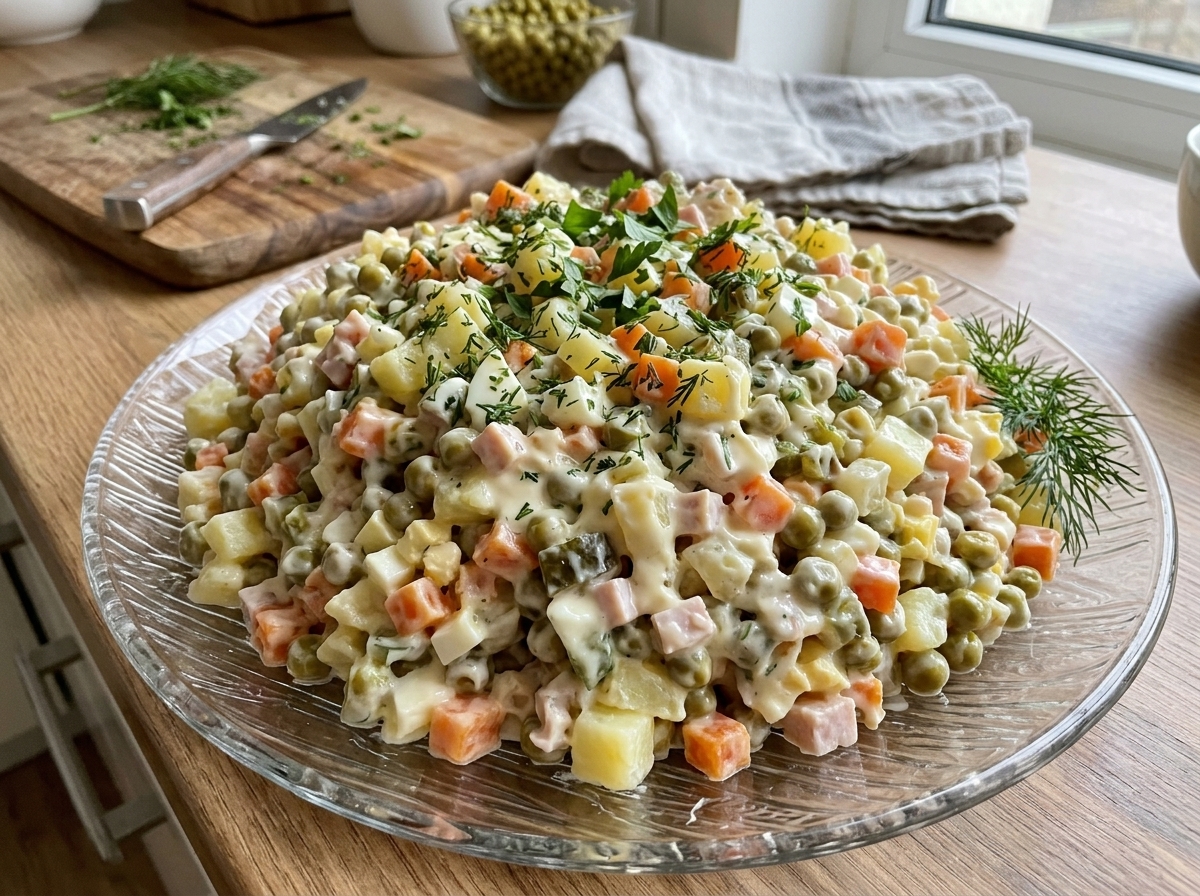
Healthy Olivier Salad
A traditional Eastern European salad made with tender potatoes, carrots, green peas, smoked ham, hard-boiled eggs, dill pickles, and a rich homemade mayonnaise dressing.
10
servings20
minutes5
minutes344
kcal25
minutesIngredients
- For the Salad:
2 pounds Yukon Gold potatoes, or another yellow potato variety
3 large carrots
1 small yellow onion, or sweet onion
1 1/2 cups peas, canned, frozen, or fresh
1 pound smoked ham, cut into 1/2-inch cubes
4–5 hard-boiled eggs, diced
2/3 cup diced dill pickles (about 3–4 pickles)
2 tablespoons capers, rinsed and drained
1/3 cup sweet corn or diced yellow bell pepper (optional)
- For the Dressing:
1 cup good mayonnaise
1/4 cup sour cream (or Greek yogurt)
2 green onions/scallions, chopped (or equivalent chives)
1–2 tablespoons chopped fresh dill or parsley, plus sprigs for garnish
1 tablespoon Dijon mustard
1 1/2 teaspoons Worcestershire sauce
1 1/2 teaspoons kosher salt
1/2 teaspoon freshly ground black pepper
1/2 teaspoon sugar
Directions
- Prepare the Vegetables
Peel and dice the potatoes into 1/2-inch cubes. Peel and dice the carrots into 1/4-inch cubes. Boil them together until tender but not mushy, approximately 3–5 minutes. Drain thoroughly and allow them to cool. - Prepare the Dressing
Combine the mayonnaise, sour cream, chopped green onions, fresh dill or parsley, Dijon mustard, Worcestershire sauce, kosher salt, black pepper, and sugar in a bowl. Stir until smooth and well combined. Adjust the seasoning to taste. - Combine the Salad Ingredients
Place the cooled potatoes and carrots in a large mixing bowl. Add the smoked ham, peas, hard-boiled eggs, dill pickles, capers, and optional sweet corn or yellow bell pepper. - Add the Dressing
Pour the prepared dressing over the salad ingredients. Gently stir until everything is evenly coated. Avoid overmixing to keep the potatoes and eggs intact. - Chill and Serve
Cover the bowl and refrigerate for at least one hour before serving. Garnish with fresh dill or parsley if desired. Serve chilled.
Notes
- Make Ahead: Prepare the individual ingredients up to one day in advance. For the best texture, add the dressing a couple of hours before serving.
- Potatoes: Yukon Gold potatoes are recommended because they hold their shape better than starchy potatoes.
- Protein Substitutions: Smoked ham can be replaced with rotisserie chicken or European bologna.
- Dressing: Greek yogurt can be used instead of sour cream.
- Storage: Store leftovers in an airtight container in the refrigerator for 3–4 days.
- Serving Tip: For a decorative presentation, press the salad into a lightly oiled mold and invert it onto a serving plate.
Nutrition Facts
- Calories: 344kcal
- Fat: 22g
- Carbohydrates: 23g
- Fiber: 4g
- Sugar: 4g
- Protein: 14g


