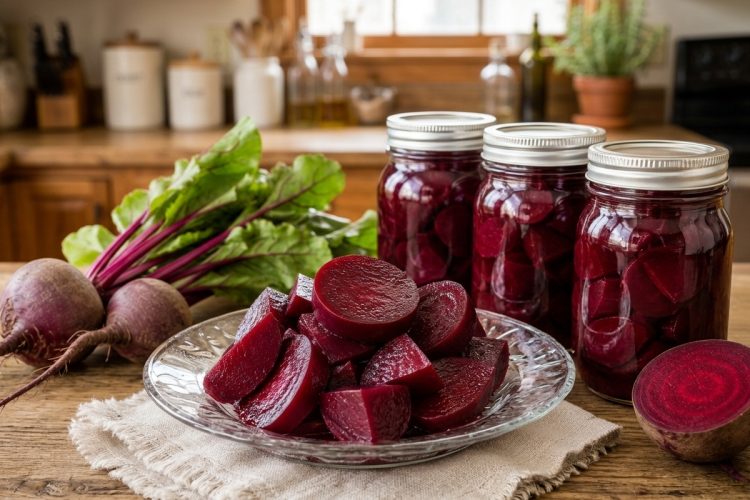
Homemade pickled beets are a delicious way to enjoy the natural sweetness of fresh beets with a tangy vinegar brine and a gentle touch of warm spices. Their deep red color makes them an attractive addition to family dinners, salads, sandwiches, and vegetable platters. This traditional recipe uses simple ingredients, including white vinegar, white sugar, pickling salt, and ground cloves, to create tender, flavorful beets that are easy to serve with many different meals.
Making pickled beets at home allows you to prepare a generous batch using fresh ingredients and familiar cooking methods. The beets are boiled until tender, peeled, sliced, and covered with a sweet-and-sour pickling liquid. The combination of vinegar and sugar balances the earthy flavor of the beets, while ground cloves add a mild aromatic note. With the right preparation and safe storage method, homemade pickled beets can become a useful addition to your meal planning.
This Pickled Beets Recipe
Simple Ingredients and Traditional Flavor
One of the best features of this homemade pickled beets recipe is its short ingredient list. Fresh beets provide the main flavor, while white vinegar adds acidity and white sugar balances its sharpness. Pickling salt seasons the brine, and ground cloves contribute a subtle warmth without making the beets taste heavily spiced. Each ingredient has a purpose, creating a familiar sweet-and-tangy flavor that works well with everyday meals.
You do not need complicated equipment beyond basic cooking and appropriate canning supplies. Most of the preparation involves boiling, peeling, slicing, and packing the beets. Although the complete process takes several hours, much of that time is spent waiting for the beets and jars to cool. Preparing everything in advance makes the recipe easier to manage, especially when working with a large quantity of vegetables.
Beautiful Color and Tender Texture
Beets are known for their naturally rich color, which becomes especially attractive when the vegetables are sliced and covered with pickling liquid. The red or purple tones look beautiful in clear glass jars and bring brightness to a serving plate. Their earthy taste becomes more balanced when combined with the vinegar-based brine, making the finished slices suitable for serving alongside savory dishes.
The texture depends largely on cooking the beets correctly. They should be tender enough to peel and slice easily while still holding their shape. Overcooking can make the slices too soft, so check their tenderness during boiling. Choosing beets of similar sizes can also help them cook more evenly, although smaller beets may need to be removed before larger ones finish cooking.
How to Make Homemade Pickled Beets
Cook the Beets Until Tender
Place the prepared beets in a large pot and cover them completely with water. Bring the water to a boil, then reduce the heat and continue cooking for approximately 20 to 25 minutes. Cooking time depends on the size of the beets, so check their tenderness instead of relying only on the clock. A fork or thin knife should enter the center without much resistance.
Avoid cooking the beets until they become mushy, because they need to remain firm enough for slicing and packing. When they are tender, remove the pot from the heat and drain the beets. Reserve one cup of the cooking liquid before discarding the rest, as this liquid will be used to prepare the pickling brine.
Prepare the Jars and Lids
While the beets are cooking, inspect six 16-ounce canning jars for cracks, chips, or other damage. Check the rings for rust and discard any defective equipment. Prepare the jars according to the manufacturer’s instructions and current home-canning guidance. Wash new, unused lids in warm, soapy water and follow the manufacturer’s directions for their preparation.
Keep the jars hot until filling time to reduce the risk of thermal shock when hot ingredients are added. A suitable boiling-water canner or stockpot with a rack, along with a jar lifter, makes the process easier and safer. Preparing the equipment before the brine is ready helps prevent unnecessary delays during filling.
Peel and Slice the Beets
Allow the drained beets to cool for approximately 10 to 15 minutes, or until they are comfortable enough to handle. Peel away the skins and trim any rough areas that remain. The skins often come off more easily after boiling, which makes this step less difficult than peeling raw beets.
Slice the peeled beets into even pieces and place them in a clean container while you prepare the brine. Avoid pressing too hard when cutting because the cooked vegetables can be delicate. Consistent slices are easier to pack into jars and provide a neat appearance when the finished pickled beets are served.
Prepare the Sweet and Tangy Brine
Strain the reserved cup of beet cooking water through a fine-mesh strainer into a saucepan. Add the white vinegar, white sugar, pickling salt, and ground cloves. Stir the mixture and bring it to a rapid boil over high heat. Continue stirring as needed until the sugar and salt dissolve into the liquid.
The resulting brine combines sweetness, acidity, and gentle spice in a single mixture. Handle the boiling liquid carefully because splashes can cause burns. Keep the saucepan on a stable surface and use suitable heat-resistant equipment. Once the brine is boiling and the seasonings are dissolved, it is ready for filling the jars according to the verified recipe’s directions.
Fill the Jars Carefully
Pack the sliced beets into the prepared jars, arranging them neatly without crushing the pieces. Pour the hot brine over the beets, following the headspace specified by a tested canning recipe. The supplied directions mention both one-half inch during initial packing and one-quarter inch after adding the brine, so verify the correct final headspace before proceeding.
Use a clean utensil suitable for canning to remove trapped air bubbles. Wipe each jar rim with a clean, damp paper towel to remove any brine or food particles that could interfere with sealing. Apply the lids and rings according to the manufacturer’s instructions. Avoid overtightening the rings, as the correct closure is important during processing.
Process and Cool the Jars Safely
Place a rack in the bottom of a suitable boiling-water canner and add water according to its instructions. Lower the filled jars onto the rack using a jar lifter, leaving enough space for water to circulate. The original directions specify covering the jars with at least one inch of boiling water and processing for 30 minutes.
However, do not assume that this processing time guarantees safe shelf storage. Confirm the correct processing method and time for this exact recipe, jar size, and altitude using current USDA or National Center for Home Food Preservation guidance. Once the verified process is complete, remove the jars carefully and allow them to cool undisturbed for 12 to 24 hours. Check the seals according to the lid manufacturer’s instructions. Refrigerate any jar that fails to seal.
Tips for the Best Homemade Pickled Beets
Choose Fresh Vegetables
Firm, fresh beets generally produce better results than vegetables that are soft or damaged. Similar-sized beets help with even cooking and make preparation easier. If the sizes vary, check the smaller vegetables first and remove them when tender to prevent overcooking.
Measure Every Ingredient Carefully
The combination of vinegar, sugar, salt, and cloves determines the flavor of this recipe. Measuring accurately helps maintain the intended balance. For safe canning, do not alter the vinegar quantity, acidity, or other preservation-related proportions without a tested recipe that specifically supports the change.
Organize Your Equipment Before Starting
Prepare the jars, lids, rings, saucepan, rack, and jar lifter before the beets finish cooking. Having everything within reach makes the filling process more organized and reduces delays while the brine is hot. Use clean equipment and follow the directions for your particular jars and lids.
How to Serve Pickled Beets
Serve With Everyday Meals
Homemade pickled beets pair well with roasted chicken, cooked meats, potatoes, and other vegetables. Their tangy flavor contrasts nicely with rich or savory foods, while their sweetness adds variety to a simple meal. Serve a small portion in a bowl or arrange several slices alongside the main dish for a colorful presentation.
They are also useful for lunches. Add a few slices beside sandwiches, wraps, crackers, or cheese. Because the brine has a pronounced sweet-and-sour flavor, a modest serving can make a meal more interesting without overpowering the other ingredients.
Add Them to Salads and Vegetable Platters
Sliced pickled beets bring color and flavor to green salads, grain bowls, and vegetable plates. They pair well with leafy greens, cucumbers, carrots, and mild cheeses. Drain the slices before adding them to a salad to prevent excess brine from collecting at the bottom of the bowl.
You can also include pickled beets on a platter with other suitable pickled vegetables. Their deep color creates a pleasing contrast with green cucumbers and pale vegetables. Use clean serving utensils and refrigerate opened jars promptly after serving.
Storage and Frequently Asked Questions
How Should Homemade Pickled Beets Be Stored?
Only store jars at room temperature if the recipe and processing method have been verified as safe for shelf storage. Follow the correct vinegar acidity, jar size, headspace, processing time, and altitude adjustments. A sealed lid alone does not prove that the contents are safe.
If a jar fails to seal, refrigerate it promptly and treat the beets as refrigerated food. Once a jar has been opened, keep the remaining beets covered with brine, use clean utensils, and store them in the refrigerator. Discard jars showing leakage, bulging lids, broken seals, mold, or other signs of spoilage without tasting the contents.
Why Is Beet Cooking Water Added to the Brine?
The recipe reserves one cup of beet cooking water to add color and flavor to the pickling liquid. Because the liquid has been in contact with the beets, it carries some of their natural color. Straining it before adding the vinegar and seasonings removes small particles and helps create a cleaner brine.
Are These Pickled Beets Sweet or Sour?
These homemade pickled beets have both sweet and sour flavors. White sugar balances the acidity of the vinegar, while the beets contribute natural sweetness and an earthy taste. Ground cloves add a gentle aromatic note. Following the original ingredient quantities helps maintain the traditional flavor intended by the recipe.
Can I Reduce the Sugar or Vinegar?
Changing the sugar may affect the taste, but changing the vinegar quantity or acidity can affect preservation safety. Do not reduce the vinegar or substitute a lower-acidity product in a recipe intended for room-temperature storage. If you prefer a different flavor balance, use a separately tested recipe designed for that purpose.
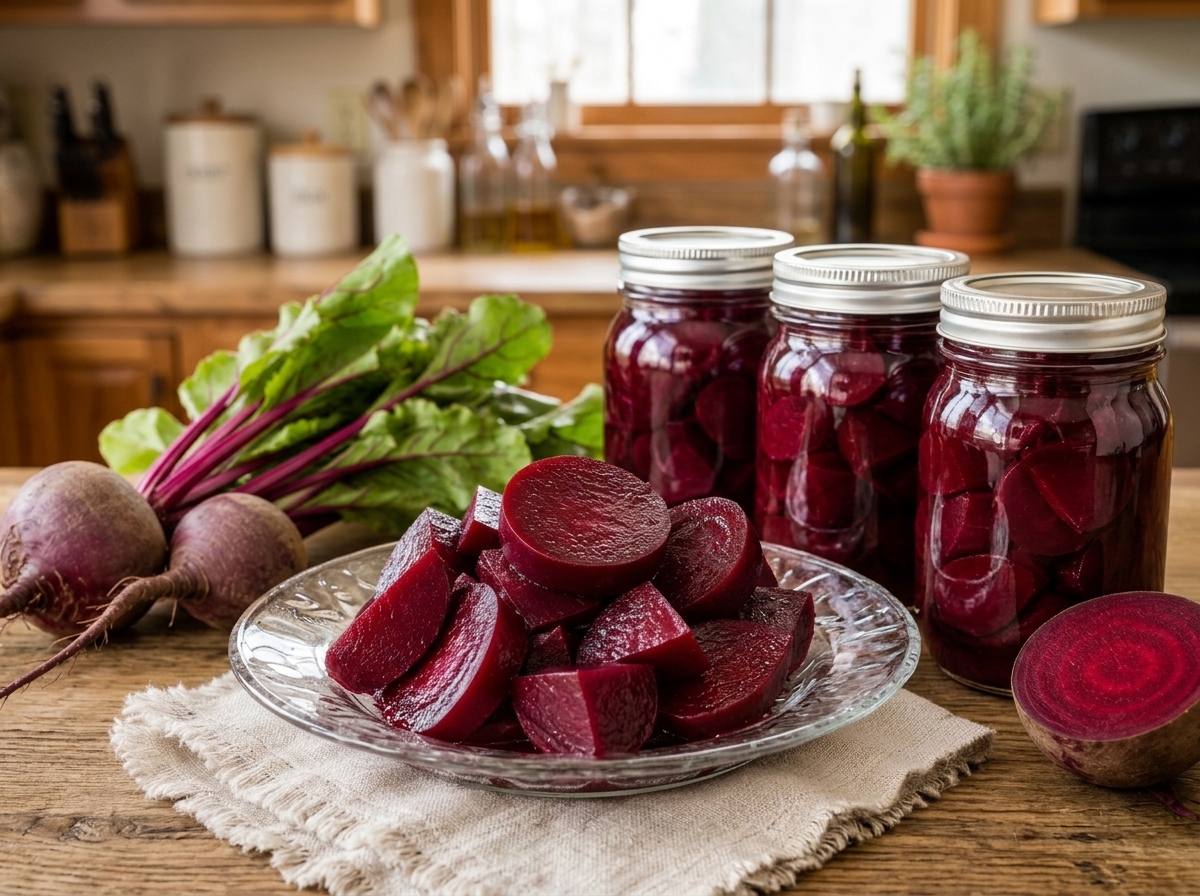
Healthy Pickled Beets Recipe
Homemade pickled beets made with tender beet slices, white vinegar, sugar, pickling salt, and ground cloves.
24
servings45
minutes1
hour5
minutes424
kcal730
14
hoursIngredients
5 pounds beets, stems removed
4 cups white vinegar
2 cups white sugar
1 ½ teaspoons pickling salt
½ teaspoon ground cloves
Directions
- Cook the Beets
Place the beets in a large pot and cover them with water. Bring to a boil, reduce the heat, and cook for 20–25 minutes or until tender, checking larger beets as needed. - Prepare the Jars
Inspect six 16-ounce jars and their rings for damage. Prepare the jars according to safe canning guidance and wash new lids in warm, soapy water, following the manufacturer’s instructions. - Peel and Slice
Drain the cooked beets, reserving one cup of the cooking water. Allow the beets to cool for 10–15 minutes, then peel and slice them. - Make the Pickling Brine
Strain the reserved beet water into a saucepan. Add the white vinegar, sugar, pickling salt, and ground cloves. Bring the mixture to a rapid boil, stirring until the sugar and salt dissolve. - Fill the Jars
Pack the sliced beets into the prepared jars. Pour the hot brine over them, following the headspace requirements of a verified canning recipe. Remove air bubbles with a suitable utensil and wipe the jar rims clean. Apply lids and rings according to the manufacturer’s directions. - Process the Jars Safely
Place the jars on a rack inside a suitable boiling-water canner. Process according to a verified recipe for the jar size and altitude. The original recipe lists 30 minutes, but confirm that this time and method are appropriate for safe preservation before proceeding. - Cool and Check the Seals
Remove the jars carefully and allow them to cool undisturbed for 12–24 hours. Check the seals according to the lid manufacturer’s instructions. Refrigerate any jar that fails to seal and use it as refrigerated food rather than storing it at room temperature.
Nutrition Facts
- Calories: 424kcal
- Fat: 1g
- Carbohydrates: 103g
- Protein: 6g


