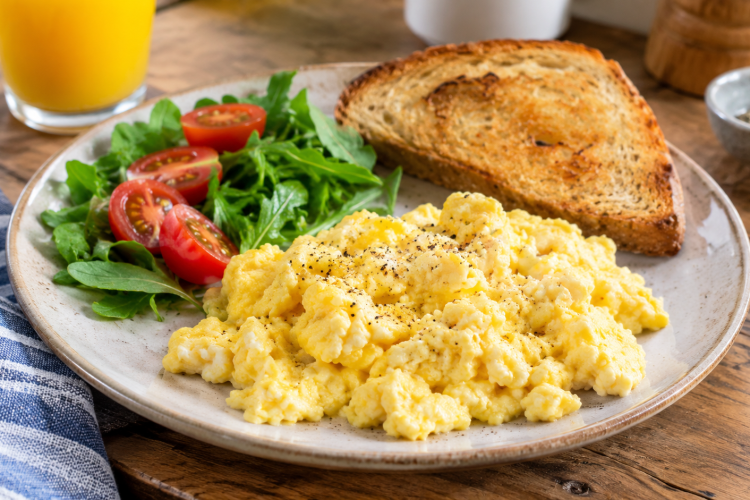
Soft-scrambled eggs are a simple breakfast favorite with a creamy texture, delicate curds, and a rich buttery flavor. Unlike traditional scrambled eggs that are cooked until firm and fluffy, this method keeps the eggs soft and moist without making them watery or runny. The secret is to use gentle heat, stir frequently, and remove the pan from the burner before the eggs are completely cooked. With a few everyday ingredients and just 10 minutes, you can prepare a delicious homemade breakfast.
This easy soft-scrambled eggs recipe uses three large eggs, kosher salt, unsalted butter, and optional milk. Freshly ground black or white pepper adds a little extra flavor just before serving. The cooking method is simple enough for beginners, but the results are satisfying for anyone who enjoys creamy, restaurant-style eggs. Serve them with toast, fresh vegetables, breakfast potatoes, or fruit for a quick meal that works well on busy mornings and relaxed weekends.
What Makes Soft-Scrambled Eggs Special?
A Creamy and Tender Texture
The main difference between soft-scrambled eggs and regular scrambled eggs is their texture. Traditional scrambled eggs often develop larger, firmer curds because they are cooked quickly over higher heat. Soft-scrambled eggs are cooked more gently, allowing the mixture to thicken gradually and form tender curds that remain moist. The finished eggs should look slightly glossy, with a creamy consistency that is neither dry nor excessively liquid.
This recipe produces eggs that fall between fluffy American-style scrambled eggs and the very smooth, custard-like French version. Frequent stirring breaks up large curds while allowing small, delicate pieces to form. The result is a soft scramble that holds its shape on the plate but still feels rich and tender. If you prefer eggs that are creamy without being completely smooth, this method offers an excellent balance.
Why Starting With a Cold Pan Helps
Starting the eggs in a cold nonstick skillet helps the mixture warm gradually instead of setting immediately when it touches a hot cooking surface. This gives you more control over the cooking process and helps prevent the bottom from becoming firm before the rest of the eggs are ready. Adding the butter at the beginning also allows it to melt as the skillet heats.
Once the pan is placed over medium-low to medium heat, the eggs begin to thicken slowly. Stirring with a silicone spatula distributes the heat and moves the setting eggs away from the bottom of the pan. Although the mixture can cook relatively quickly, this technique gives you time to watch the texture and adjust the heat when necessary.
Ingredients for Soft-Scrambled Eggs
Eggs, Salt, and Milk
Three large eggs provide the base for this single-serving breakfast. Beat them thoroughly in a small bowl until the yolks and whites are combined and no visible streaks of egg white remain. This helps the mixture cook evenly and gives the finished eggs a consistent color and texture. You do not need to whip the eggs until foamy; a smooth mixture is all you need.
The recipe uses one-eighth teaspoon of kosher salt to season the eggs before cooking. Pre-salting allows the seasoning to spread throughout the mixture rather than sitting only on the surface. Two tablespoons of milk are optional and add a slightly richer, moister texture. If you prefer a stronger egg flavor, you can leave the milk out without changing the rest of the method.
Unsalted Butter and Freshly Ground Pepper
Half a tablespoon of unsalted butter adds richness and helps give the eggs their familiar buttery flavor. Unsalted butter is useful because it allows you to control the seasoning more easily. Add it directly to the cold skillet with the beaten eggs, then let it melt as the pan warms. Stirring frequently helps the butter distribute through the mixture as the curds develop.
Freshly ground black or white pepper finishes the dish. Black pepper has a noticeable, slightly sharp taste, while white pepper offers a subtler appearance and a different aromatic flavor. Either works well with creamy eggs. Add the pepper just before serving so you can season the finished dish according to your preference without overpowering its delicate flavor.
How to Make Soft-Scrambled Eggs
Step 1: Beat the Eggs
Crack three large eggs into a small bowl and add the kosher salt and optional milk. Beat the ingredients with a fork or whisk until the mixture is smooth and evenly combined. Check that there are no visible streaks of egg white remaining, because unevenly mixed eggs may cook inconsistently.
Avoid beating the mixture excessively. The goal is to combine the yolks and whites rather than incorporate a large amount of air. Once the eggs are ready, move on to the skillet so you can begin cooking without delay. Preparing the mixture first also makes it easier to check for eggshell fragments before the ingredients reach the pan.
Step 2: Add the Eggs and Butter to a Cold Skillet
Pour the beaten egg mixture into a small, cold nonstick skillet. Add the unsalted butter directly to the pan. Do not preheat the skillet for this method, as the gradual warming process helps prevent the eggs from setting too quickly at the beginning of cooking.
A nonstick skillet makes it easier to move the eggs around without leaving cooked pieces stuck to the surface. Use a silicone spatula to protect the pan’s coating and gently move the mixture as it thickens. A small skillet works well for this single-serving recipe because it keeps the eggs together and makes frequent stirring easier.
Step 3: Cook Over Medium-Low to Medium Heat
Place the skillet over medium-low to medium heat and begin stirring frequently with the silicone spatula. Sweep the spatula across the bottom and sides of the pan, bringing the thickening eggs back toward the center. As the butter melts and the mixture warms, small curds will begin to appear.
Continue stirring while watching the texture closely. The eggs should gradually change from a thin liquid into a creamy mixture with soft pieces. If they begin setting too quickly, lower the heat slightly. Keeping the mixture moving prevents the bottom from becoming overly firm and helps the eggs cook more evenly.
Step 4: Remove the Pan Before the Eggs Are Fully Set
When the eggs have mostly thickened but still look slightly glossy, remove the skillet from the heat. They should have soft curds rather than a completely liquid consistency, but they should not look dry or firm. Taking the pan off the burner at this stage is one of the most important steps for achieving tender scrambled eggs.
The eggs continue cooking from residual heat even after the burner is switched off. Leave them in the hot skillet for too long, and they may become firmer than you intended. Continue stirring for several seconds after removing the pan, allowing the remaining warmth to finish cooking the curds gently.
Step 5: Adjust the Consistency
Check the eggs after stirring them off the heat. If they are still too loose for your preference, return the skillet to the burner briefly and continue stirring. Use short intervals rather than leaving the pan over the heat for a long time. This makes it easier to reach your preferred consistency without overcooking the mixture.
The finished eggs should be creamy and moist, but not watery. Remember that the mixture will continue to firm up as it cools slightly. It is better to stop cooking a little early than to wait until the eggs appear completely firm in the pan. Once they reach the desired texture, remove them from the skillet immediately.
Step 6: Season and Serve
Finish the eggs with freshly ground black or white pepper, then transfer them to a serving plate. Serve immediately while the curds are warm and tender. Avoid leaving the eggs in the skillet while preparing other parts of breakfast, because the remaining heat can continue cooking them and make their texture less creamy.
These eggs are delicious on their own or served with toasted bread, fresh tomatoes, leafy greens, or breakfast potatoes. Their mild flavor pairs well with many simple sides, so you can build a breakfast around ingredients you already have. Since the recipe makes one serving, it is especially convenient when you want a fresh, quick breakfast without preparing a large batch.
Tips for Perfect Soft-Scrambled Eggs
Stir Frequently and Control the Heat
Frequent stirring helps create the small, delicate curds that make soft-scrambled eggs different from firmer versions. Move the spatula across the bottom of the skillet, gently scrape the sides, and fold the thickening mixture toward the center. You do not need to stir aggressively; steady, regular movement is enough to prevent large sections from setting too quickly.
Every stove and skillet behaves differently, so use the eggs’ appearance as your guide. If they begin forming firm pieces almost immediately, lower the heat. If the mixture remains completely liquid for an unusually long time, a small increase in heat may help. Maintaining control over the cooking temperature is more useful than relying on a fixed time alone.
Remove the Eggs From the Heat Early
Soft-scrambled eggs are easiest to get right when you stop cooking before they look completely finished. The remaining heat will continue setting the curds after the pan leaves the burner. Look for eggs that are mostly cooked but still slightly glossy, then stir them briefly off the heat to finish the process.
This approach helps prevent the dry, rubbery texture that can develop when eggs are cooked for too long. If the mixture needs a little more time, you can always return the pan to the burner for a few seconds. However, once the eggs become firm and dry, additional cooking will not restore their original softness.
Measure the Milk Carefully
Milk is optional, but the amount matters. Two tablespoons add a little richness without introducing too much liquid. Adding substantially more may leave the eggs looser than expected and can make it harder to judge when they are ready. For consistent results, measure the milk rather than pouring it directly into the bowl.
If you prefer scrambled eggs without milk, simply omit it. The butter, gentle heat, and frequent stirring are the main elements that help produce a creamy texture. Both versions can be delicious, so choose the one that suits your taste and keep the cooking method consistent.
Common Mistakes to Avoid
Cooking the Eggs Over High Heat
High heat can cause the egg proteins to set too quickly, producing firm edges and dry curds. The bottom may cook faster than the top, making the mixture difficult to control. For soft-scrambled eggs, medium-low to medium heat provides a gentler cooking process and gives you more time to stir the mixture.
If the eggs begin thickening too quickly, reduce the heat and keep moving the spatula across the pan. Do not leave the mixture sitting in one place for too long. A little patience during cooking helps preserve the moisture and tenderness that make this breakfast recipe so enjoyable.
Leaving the Eggs in the Skillet
Even when the burner is off, the skillet remains hot enough to continue cooking the eggs. Leaving them in the pan while you toast bread or prepare coffee can result in a firmer texture than you wanted. To avoid this, prepare your plate and breakfast sides before cooking the eggs.
As soon as the curds reach your preferred consistency, transfer them to a plate. Serving immediately helps preserve their soft texture and prevents unnecessary cooking. This small habit is particularly important when making a single portion, because a small quantity of eggs can change consistency very quickly.
What to Serve With Soft-Scrambled Eggs
Toast and Breakfast Bread
Toast is a classic accompaniment because its crisp texture contrasts nicely with soft, creamy eggs. Serve the scramble with whole-wheat toast, sourdough, or your favorite breakfast bread. You can enjoy the eggs alongside the toast or spoon them onto a slice for a simple breakfast that requires very little preparation.
For a more filling plate, add breakfast potatoes or another side you enjoy. Keep the preparation simple so the eggs remain the main feature. If you are cooking several breakfast items, prepare the sides first and cook the eggs last. This makes it easier to serve everything warm without leaving the finished scramble in the pan.
Fresh Fruit and Vegetables
Fresh fruit provides a refreshing contrast to the rich flavor of butter and eggs. Berries, sliced apples, melon, and oranges are easy choices for a balanced breakfast plate. If you prefer vegetables, fresh tomatoes, leafy greens, or sautéed mushrooms work well with the mild flavor of the scramble.
These sides are optional, so use what you have available. The eggs are satisfying on their own, but adding fruit or vegetables can bring different textures and flavors to the meal. Prepare any cooked sides in advance so you can serve the eggs immediately after they finish cooking.
Frequently Asked Questions
Is Milk Necessary for Soft-Scrambled Eggs?
No, milk is optional. It adds a slightly richer, moister texture, but the recipe works without it. If you leave it out, beat the eggs with the kosher salt and follow the same cooking instructions. Gentle heat, frequent stirring, and removing the pan before the eggs are fully set are the most important techniques.
Why Should You Start With a Cold Pan?
A cold pan allows the eggs and butter to warm gradually. This helps prevent the mixture from setting too quickly against a hot cooking surface and gives you more control over the texture. Use a nonstick skillet and stir regularly as the mixture heats so the curds form gently and evenly.
How Can You Tell When the Eggs Are Ready?
The eggs are ready when they form tender curds and are mostly set but still slightly glossy. They should not be watery, but they should also not look dry or firm. Remove the skillet from the heat at this stage and continue stirring briefly. The residual warmth will finish cooking the eggs.
Why Are My Scrambled Eggs Rubbery?
Rubbery eggs usually result from cooking at too high a temperature or leaving the mixture on the heat for too long. Excessive heat causes the curds to become firm and lose moisture. Reduce the heat, stir frequently, and take the skillet off the burner while the eggs still look slightly glossy.
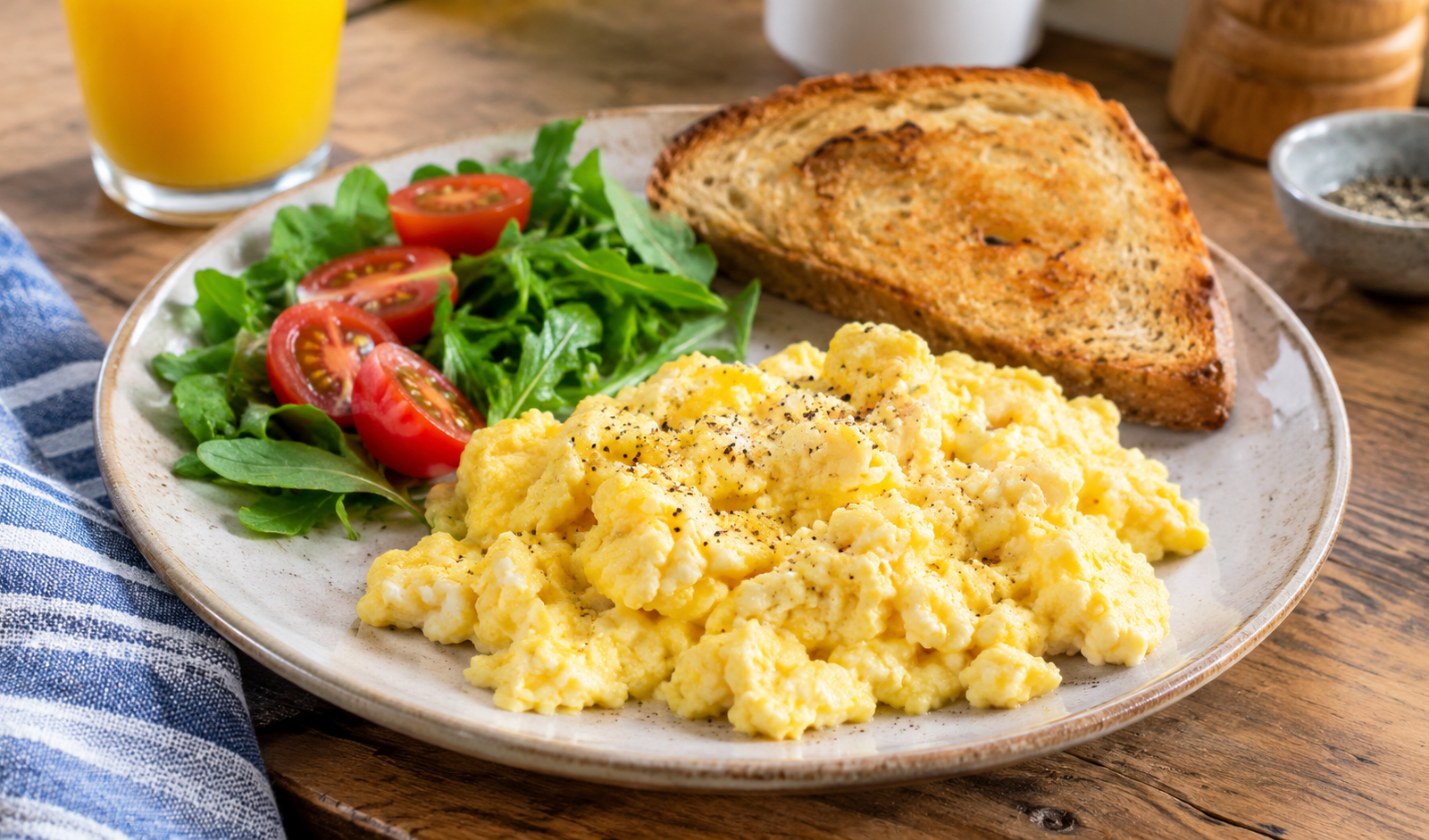
High-Protein Creamy Soft Scrambled Eggs
Make creamy, tender soft-scrambled eggs with three large eggs, butter, kosher salt, and optional milk. Starting in a cold pan and stirring frequently helps create soft curds without overcooking.
1
servings5
minutes5
minutes266
kcal10
minutesIngredients
3 large eggs
1/8 teaspoon kosher salt
2 tablespoons (30 ml) milk (optional; see notes)
1/2 tablespoon (7 g) unsalted butter
Freshly ground black or white pepper
Directions
- In a small bowl, beat the eggs with the kosher salt and milk, if using, until no visible egg whites remain.
- Pour the beaten eggs into a small cold nonstick skillet and add the unsalted butter.
- Place the skillet over medium heat and stir frequently with a silicone spatula as the eggs begin to thicken.
- Continue stirring until the eggs are moist and just beginning to set into soft curds.
- Remove the skillet from the heat and continue stirring while the eggs finish cooking from the residual heat.
- If the eggs are still too loose, return the skillet to the heat briefly, stirring until they reach your preferred consistency.
- Season with freshly ground black or white pepper and serve immediately.
Notes
- Milk adds a slightly richer, moister texture but is not required.
- Start with a cold nonstick skillet for more gradual cooking.
- Remove the eggs from the heat just before they reach the desired doneness because residual heat will continue cooking them.
- Serve immediately for the softest texture.
Nutrition Facts
- Calories: 266kcal
- Fat: 20g
- Carbohydrates: 1g
- Protein: 19g


