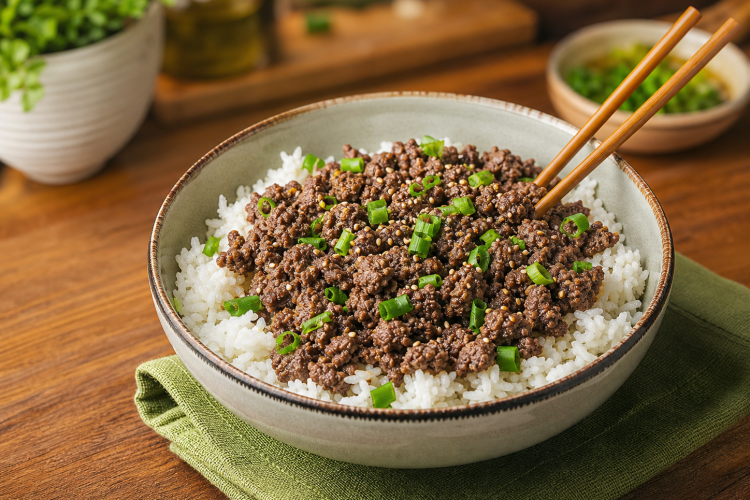
Korean Ground Beef and Rice Bowls are a quick dinner made with lean ground beef, garlic, brown sugar, soy sauce, sesame oil, ginger, and red pepper flakes. The seasoned beef is cooked in a skillet and spooned over hot rice. Green onions and sesame seeds finish each bowl with a fresh, simple topping.
This ground beef rice bowl recipe is especially useful on busy weeknights because the whole meal takes about 20 minutes. There is no long marinating time or complicated preparation. While the rice is cooking, the beef can be browned and the simple sauce can be mixed in a separate bowl.
Why This Ground Beef Rice Bowl Is Easy
The recipe uses a short list of everyday ingredients, but they create a good balance of sweet, salty, savory, and slightly spicy flavors. Brown sugar gives the beef a touch of sweetness, while reduced-sodium soy sauce adds the salty flavor needed for the sauce.
Sesame oil adds a nutty aroma, and ginger gives the beef a warm, slightly sharp taste. Garlic brings another layer of savory flavor, while crushed red pepper flakes add a small amount of heat. Served over rice, the seasoned beef becomes a complete and filling meal.
Choosing the Ground Beef
Use 1 pound of lean ground beef that is 90% lean, as specified in the original recipe. Lean beef works well because it provides plenty of flavor while producing less excess grease in the skillet than fattier ground beef.
As the beef cooks, use a wooden spoon or spatula to break it into small crumbles. Smaller pieces allow the sauce to coat the meat more evenly. Once the beef is no longer pink, drain the excess grease before adding the sauce.
Cooking Ground Beef Safely
Ground beef should be cooked to a safe internal temperature of 160°F. A food thermometer is the most reliable way to check the center of the cooked meat. This is especially important when preparing ground beef because bacteria can be present throughout the meat.
Cook the beef over medium heat until it is no longer pink and has reached the appropriate internal temperature. Once cooked, drain any excess grease from the skillet. The beef is then ready to absorb the sweet and savory sauce.
Adding Garlic to the Beef
Three minced garlic cloves are cooked together with the ground beef. Adding garlic while the beef cooks allows its flavor to spread through the meat rather than leaving it as a separate taste.
Stir the beef regularly while it cooks so the garlic does not sit against the hot surface for too long. Properly cooked garlic should smell fragrant and savory. Avoid allowing it to become dark or burnt, as burnt garlic can taste bitter.
Making the Simple Korean-Inspired Sauce
The sauce comes together in a small bowl using brown sugar, reduced-sodium soy sauce, sesame oil, ground ginger, crushed red pepper flakes, and pepper. Whisking these ingredients together before adding them to the beef helps distribute the seasonings evenly.
There is no need to cook the sauce separately. Once the ground beef has been browned and drained, pour the mixture directly into the skillet. Stir thoroughly so the sauce reaches all of the beef crumbles.
Getting the Sweet and Savory Flavor
Brown sugar provides the sweet element in this easy beef recipe. It balances the salty flavor of soy sauce and gives the cooked beef a slightly glossy coating as the sauce warms in the skillet.
Reduced-sodium soy sauce provides the main savory taste. Using reduced-sodium soy sauce also keeps the recipe from becoming unnecessarily salty. The two ingredients work together to create the main flavor of the beef without requiring a long list of seasonings.
Using Sesame Oil
The recipe uses 2 teaspoons of sesame oil. Although only a small amount is needed, sesame oil adds a distinct nutty aroma that makes the beef taste different from an ordinary seasoned ground beef dish.
Add it directly to the sauce mixture along with the soy sauce and other seasonings. This allows it to spread throughout the beef when the sauce is stirred in. Because sesame oil has a strong flavor, the listed amount is enough for the recipe.
Adding Ginger and Red Pepper
Ground ginger adds mild warmth and a subtle spicy note to the sauce. The recipe uses only 1/4 teaspoon, so the ginger supports the other ingredients without becoming the main flavor.
Crushed red pepper flakes provide a little heat. The amount is also small, making the dish suitable for people who prefer gentle spice. If serving the recipe to different family members, additional red pepper flakes can be offered at the table.
Simmering the Beef
After the sauce is poured over the cooked ground beef, let the mixture simmer for another minute or two. This short cooking time allows the flavors to come together and gives the sauce a chance to coat the meat.
There is no need for a long simmer. The beef is already cooked, and the sauce only needs enough heat to warm through and combine with the meat. Stir gently during this final stage so the sauce is distributed evenly.
Choosing Rice for the Bowls
The original recipe works with 2 cups of hot cooked white or brown rice. White rice gives the bowl a soft, mild base that allows the seasoned beef to stand out. Brown rice has a firmer texture and a slightly nuttier flavor.
Jasmine rice is another good option when you want fragrant rice with a soft texture. The recipe does not require a particular cooking method for the rice, so you can prepare your preferred variety separately while the beef cooks.
Serving the Beef Over Rice
Once the beef is finished, spoon it over hot cooked rice. Dividing the rice between four servings makes it easy to portion the beef evenly. The warm rice also absorbs some of the sauce, giving each bite a mixture of rice and seasoned beef.
For the best texture, serve the beef soon after cooking. The rice should be hot and fluffy, while the ground beef should still have enough sauce to lightly coat the grains without making them soggy.
Adding Green Onions
Sliced green onions are used as a simple garnish. Their fresh flavor adds a little sharpness that contrasts with the sweet and savory beef. They also add color to an otherwise brown and white bowl.
Add the green onions after the beef has been spooned over the rice. Because they are used as a garnish, they do not need to be cooked. Thin slices are easiest to eat and spread well across each serving.
Finishing With Sesame Seeds
Sesame seeds provide a mild nutty flavor and a little texture. Sprinkle them over the finished bowls together with the green onions. A small amount is enough to give the dish a finished appearance without changing the main flavor.
The sesame seeds also work naturally with the sesame oil already used in the beef sauce. Together, they reinforce the nutty flavor while keeping the topping very simple.
Making the Recipe With Chicken
The same basic flavor combination can be used with chicken. If using chicken instead of beef, sauté the chicken together with the other ingredients and cook until it is no longer pink.
Chicken can be served over the same types of rice and finished with green onions and sesame seeds. The cooking time may vary depending on the size and type of chicken pieces, so make sure the chicken is fully cooked before serving.
Using Different Types of Rice
White rice is a straightforward choice because its mild flavor works well with the seasoned beef. Brown rice provides more texture and a nuttier taste, making it another suitable option for these rice bowls.
Jasmine rice is also a good choice if you enjoy fragrant rice. Whichever variety you use, prepare 2 cups of hot cooked rice for the recipe. The rice can be cooked before or while the ground beef is being prepared.
Preparing This Meal on a Busy Night
This recipe is easy to fit into a busy evening because the beef cooks quickly. Start the rice first if it needs longer to prepare. While it cooks, brown the ground beef and garlic and mix the sauce ingredients.
By the time the rice is ready, the beef should also be finished. This simple timing keeps the cooking process efficient and means you can serve the meal while both components are still hot.
Keeping the Beef From Becoming Greasy
Using 90% lean ground beef helps reduce the amount of grease produced during cooking. Even so, some fat may collect in the skillet. Drain it before adding the sauce so the finished beef has a cleaner texture.
Do not rinse the cooked beef after draining. Removing the excess grease from the skillet is enough. Keeping the cooked meat in the pan allows it to retain its flavor and makes it ready for the sauce.
Getting the Sauce to Coat the Beef
The easiest way to get evenly seasoned beef is to stir the sauce thoroughly into the cooked meat. Pour it slowly across the skillet rather than adding it to only one area. Then stir until the sauce has reached the entire mixture.
A short simmer helps the sauce cling to the beef. The brown sugar also warms and blends with the soy sauce, creating a slightly thicker coating. Do not cook it for too long, as there is no need to reduce the sauce heavily.
Adjusting the Heat
The original recipe uses 1/4 teaspoon crushed red pepper flakes, which gives the dish a mild level of heat. This amount works well when serving the bowls to a family with different spice preferences.
For people who enjoy more heat, extra red pepper flakes can be added at serving time. Keeping the main recipe mild makes it easier for everyone to adjust their own bowl without changing the base recipe.
Making the Bowls More Filling
The combination of lean ground beef and rice makes this an easy meal that can be served without complicated side dishes. The beef supplies protein, while the rice provides the main carbohydrate component.
If you want to add vegetables without changing the original recipe, serve simple cooked or fresh vegetables on the side. Steamed vegetables, cucumber, or a basic salad can complement the warm beef and rice without requiring another complicated preparation.
Simple Serving Ideas
Serve the Korean-style ground beef over hot rice and add sliced green onions and sesame seeds just before eating. The toppings should remain fresh rather than being cooked into the beef.
For a casual family meal, place the cooked rice, beef, green onions, and sesame seeds on the table separately and let everyone assemble their own bowl. This also makes it easy to control the amount of beef and toppings in each serving.
Storing Leftovers
If you have leftover beef, allow it to cool before placing it in a covered container in the refrigerator. Keep the cooked rice stored separately when possible so it is easier to reheat each component without affecting the texture of the other.
When reheating, make sure the beef and rice are heated thoroughly before serving. Fresh green onions and sesame seeds can be added after reheating to bring back some of the fresh texture.
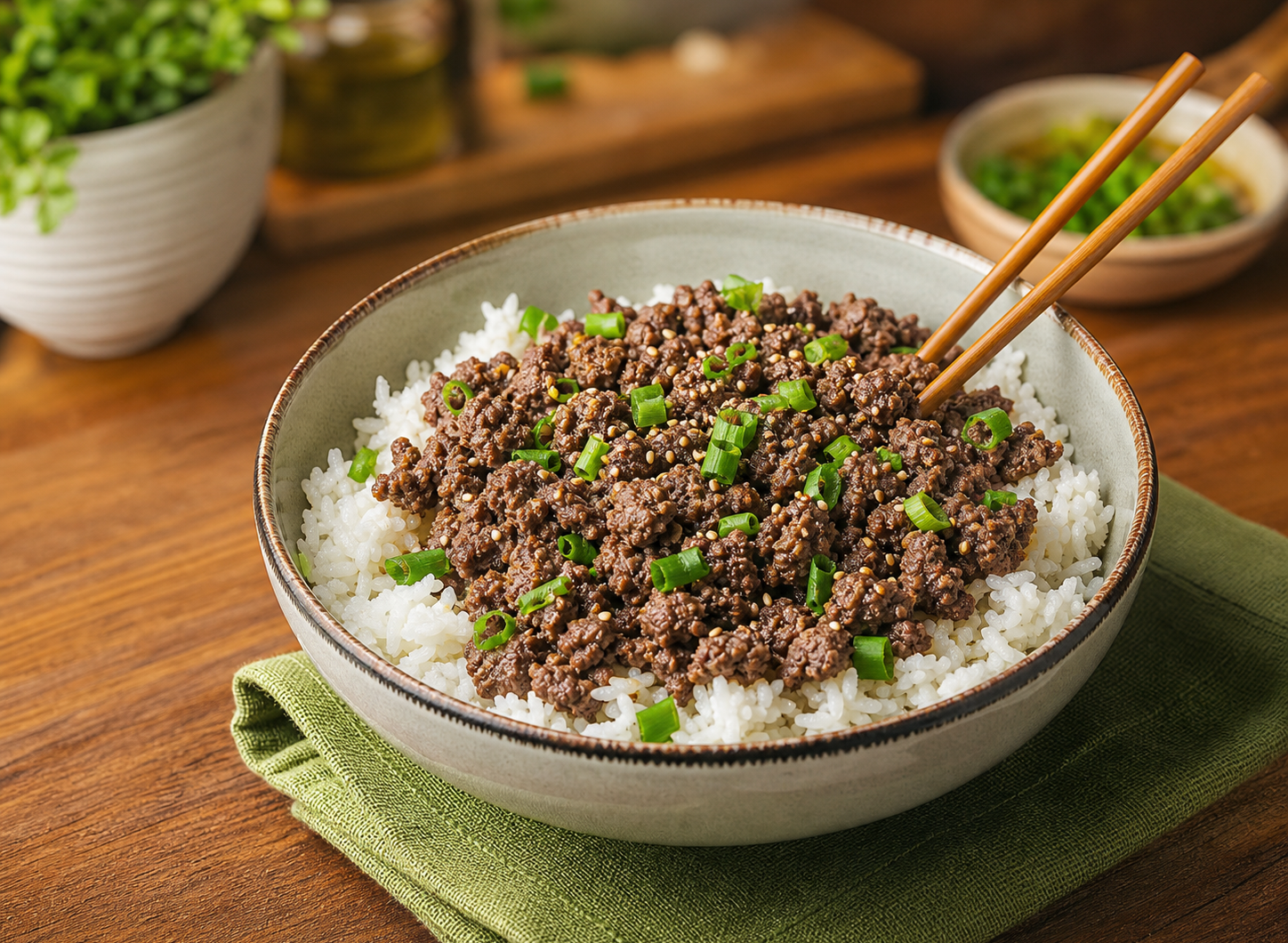
High Protein Korean Ground Beef and Rice Bowls
Quick Korean-inspired beef and rice bowls made with lean ground beef, garlic, brown sugar, soy sauce, sesame oil, ginger, and red pepper flakes. Served over hot rice with green onions and sesame seeds.
4
servings5
minutes15
minutes238
kcal20
minutesIngredients
1 pound lean ground beef, 90% lean
3 garlic cloves, minced
1/4 cup packed brown sugar
2 teaspoons sesame oil
1/4 cup reduced-sodium soy sauce
1/4 teaspoon ground ginger
1/4 teaspoon crushed red pepper flakes
1/4 teaspoon pepper
2 cups hot cooked white or brown rice
Sliced green onions and sesame seeds, for garnish
Directions
- Brown the beef: Heat a large skillet over medium heat. Add the lean ground beef and minced garlic, breaking the meat into small crumbles as it cooks. Continue until the beef is no longer pink and reaches a safe internal temperature of 160°F. Drain the excess grease.
- Mix the sauce: In a small bowl, whisk together the packed brown sugar, reduced-sodium soy sauce, sesame oil, ground ginger, crushed red pepper flakes, and pepper until well combined.
- Season the beef: Pour the prepared sauce over the cooked ground beef. Stir well so the sauce coats the meat evenly. Let the mixture simmer for 1–2 minutes so the flavors come together.
- Prepare the rice: Divide the 2 cups of hot cooked white or brown rice between four serving bowls. Keep the rice hot and fluffy so it provides a warm base for the seasoned beef.
- Assemble the bowls: Spoon the Korean-style ground beef over the cooked rice, dividing it evenly between the servings.
- Add the toppings: Finish each bowl with sliced green onions and sesame seeds. Serve immediately while the beef and rice are warm.
Nutrition Facts
- Calories: 238kcal
- Fat: 8g
- Cholesterol: 70mg
- Sodium: 610mg
- Carbohydrates: 16g
- Fiber: 1g
- Sugar: 14g
- Protein: 25g


