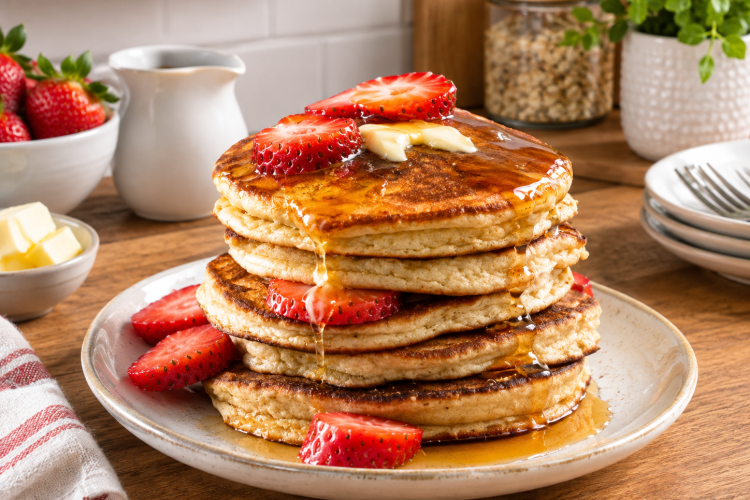
These keto pancakes are a simple choice when you want a warm, satisfying breakfast without using regular flour or sugar. Made with just five main ingredients, they are thick, soft, and pleasantly fluffy. Each serving contains only 3 grams of net carbs, making them suitable for a low-carb lifestyle. They are also naturally gluten-free because the recipe uses almond flour instead of wheat flour.
The batter comes together quickly, so this easy keto pancake recipe works well for busy mornings. You do not need complicated ingredients or special equipment to make them. A bowl, whisk, measuring cups, and a non-stick skillet are enough. With a short cooking time, you can have a homemade low-carb breakfast ready in just 9 minutes.
Why These Keto Pancakes Are So Popular
Finding a good keto pancake recipe can be difficult because many low-carb pancakes turn out dry, dense, or fragile. These almond flour pancakes are designed to have a softer and thicker texture while keeping the ingredient list simple. The eggs and almond flour work together to create structure, while the water helps loosen the batter to the right consistency.
The recipe also keeps the carbohydrate count low without making breakfast feel boring. The keto maple syrup adds sweetness and a familiar pancake flavor without regular sugar. When cooked slowly in a covered skillet, the pancakes puff up and develop a light texture. The result is a breakfast that feels close to traditional pancakes while fitting into a keto-friendly meal plan.
A Simple Low-Carb Breakfast for Busy Mornings
One of the best things about these keto breakfast pancakes is how little preparation they require. The ingredients are combined in one bowl, and the batter can go directly into a heated skillet. There is no need to prepare separate dry and wet mixtures. This makes the recipe especially useful when you want a quick breakfast before starting your day.
Because the recipe makes four servings, it can also work for meal preparation. You can cook a batch ahead of time and keep extra pancakes chilled for later. Reheating takes very little time, so leftovers can provide an easy low-carb breakfast during the week. This is helpful for anyone who prefers homemade food but does not want to cook from scratch every morning.
Almond Flour Creates the Right Texture
Almond flour is the main ingredient in these keto pancakes and replaces traditional wheat flour. It is commonly used in keto baking and low-carb recipes because it contains fewer carbohydrates than regular flour. It also gives the pancakes a mild, slightly nutty flavor that works well with the sweetness of keto maple syrup.
For the best texture, make sure the almond flour is mixed thoroughly into the batter. A smooth batter helps the pancakes cook more evenly and makes flipping easier. Since almond flour does not behave exactly like wheat flour, these pancakes need gentle handling. Keeping them reasonably small gives them more structure and reduces the chance of breaking when turned.
Eggs Help Make the Pancakes Thick and Fluffy
The eggs are important for both the texture and structure of this easy keto pancake recipe. They help bind the almond flour together and give the pancakes enough support to rise while cooking. Room-temperature eggs blend more easily with the other ingredients, helping create a smoother and more even batter.
As the pancakes cook under the lid, the trapped heat helps the egg-based batter puff up. This is one reason these low-carb pancakes can become thick without needing grain-based flour. The eggs also add protein to the recipe, making the pancakes more filling than many traditional sweet breakfast options.
Why a Pinch of Salt Makes a Difference
Only a small amount of salt is needed, but it has an important role in the overall flavor. Almond flour has a naturally mild taste, and the salt helps balance the sweetness from the keto maple syrup. Without it, the pancakes may taste flat even when all the other ingredients are present.
The amount is small enough that it does not make the pancakes salty. Instead, it brings the ingredients together and gives the finished pancakes a more balanced taste. This is a simple example of how a small pantry ingredient can improve a recipe without adding extra preparation or changing the main flavor.
Water Keeps the Pancake Batter Smooth
Water may seem like a basic ingredient, but it helps create the right consistency for these almond flour pancakes. Almond flour absorbs moisture differently from regular flour, so the liquid helps loosen the mixture and makes it easier to spoon onto the skillet. It also helps the ingredients combine into a smooth batter.
The batter should be mixed until no large dry patches remain. A consistent texture helps each pancake cook at the same rate. Since the recipe uses only a few ingredients, measuring the water correctly is useful for maintaining the intended thickness. Too much or too little can change how easily the pancakes spread and cook.
Keto Maple Syrup Adds Sweetness Without Regular Sugar
Keto maple syrup gives these pancakes a sweet flavor while keeping them suitable for a low-carb recipe. It is mixed directly into the batter, so the sweetness is spread throughout each pancake. This means you can enjoy them plain or add more syrup when serving if desired.
The sweet taste also helps these pancakes resemble a familiar American breakfast. You can serve them with melted butter and sugar-free syrup for a simple meal. If you enjoy different flavors, low-carb additions can be used according to your preferences. Keeping the basic batter simple makes it easy to change the finished breakfast without changing the original recipe itself.
The Best Way to Cook Keto Pancakes
Cooking temperature is especially important when making almond flour pancakes. Medium-low heat gives the inside time to cook before the outside becomes too dark. Higher heat may brown the surface quickly while leaving the center undercooked, so patience is useful when working with this type of batter.
Grease the skillet before adding the batter, even when using a non-stick pan. This helps the pancakes release more easily and makes flipping less difficult. Once the pan is heated, spoon the batter into small portions. Smaller pancakes are easier to turn because almond flour batter can be more delicate than traditional pancake batter.
Keep the Lid on for Fluffier Pancakes
Covering the skillet is one of the most useful methods for getting thick and fluffy keto pancakes. The lid traps heat inside the pan, allowing the pancakes to cook more evenly. This extra heat helps the batter rise and puff up rather than remaining flat.
After placing the batter in the skillet, cover the pan and allow the pancakes to cook until the edges begin to bubble. Then carefully remove the lid before flipping them. Covering the pancakes again while they finish cooking helps the second side warm through while protecting the soft center.
Keep the Pancakes Small for Easier Flipping
These keto pancakes are best made in smaller portions instead of very large circles. Almond flour does not contain gluten, so the pancakes do not have the same flexibility as standard flour pancakes. A large pancake may be harder to lift and turn without breaking.
Using large spoonfuls of batter gives you a practical size that is easier to manage. Wait until the pancakes have cooked enough to hold their shape before attempting to flip them. Use a wide spatula and turn them carefully. Gentle handling helps preserve their thick, fluffy shape.
Serving Ideas for a Keto-Friendly Breakfast
These pancakes are enjoyable immediately after cooking while they are still warm and soft. A simple serving with melted butter and sugar-free syrup keeps the meal close to a classic pancake breakfast. The mild flavor also makes the recipe easy to pair with other keto-friendly breakfast foods.
You can keep the presentation simple or add low-carb toppings that suit your taste. The pancakes work well when you want a sweet breakfast without using grains. Since each serving has 3 grams of net carbs, they can fit more easily into a daily carbohydrate target when the rest of the meal is planned accordingly.
How to Store Leftover Keto Pancakes
If you have extra pancakes, allow them to cool before placing them in a covered container. Store them in the refrigerator, where they can keep well for up to 7 days. Keeping them covered helps protect their texture and prevents them from absorbing unwanted odors from other foods.
Making extra pancakes can save time during a busy week. You can take out only the amount you need and warm them when ready to eat. This makes the recipe useful for meal planning because the pancakes do not have to be cooked fresh every time you want a quick keto breakfast.
Freezing Pancakes for Later
For longer storage, place the leftover pancakes in a ziplock bag and keep them in the freezer. They can be stored for up to 6 months. Freezing is useful when you want to prepare a larger amount ahead of time and have an easy breakfast available later.
Before freezing, make sure the pancakes are completely cooled. This helps avoid excess moisture inside the storage bag. When you are ready to use them, remove the desired amount and reheat until warm. Freezing gives you a convenient way to reduce food waste while keeping a homemade low-carb breakfast on hand.
Reheating Without Drying Them Out
Reheating keto pancakes is quick and simple. For a fast option, warm them in the microwave for about 30 seconds. Check the pancakes after heating, as microwave strength can vary. The goal is to warm them through without overheating them.
You can also reheat the pancakes in a non-stick pan. Warm them gently until heated through, turning them carefully if needed. Using moderate heat helps preserve their soft texture. This method can be a good choice when you prefer pancakes with a lightly warmed surface rather than using a microwave.
Common Cooking Problems and Simple Fixes
If your pancakes are burning too quickly, lower the heat. Almond flour pancakes need time to cook through, and medium-low heat is generally easier to control. If the center seems undercooked, keeping the lid on while cooking can help the heat reach the middle more evenly.
If a pancake breaks while flipping, try making the next batch smaller and allow it to cook longer before turning. Make sure the skillet is properly greased so the pancake can release cleanly. A wide spatula and gentle movement can also make a noticeable difference when working with this softer low-carb batter.
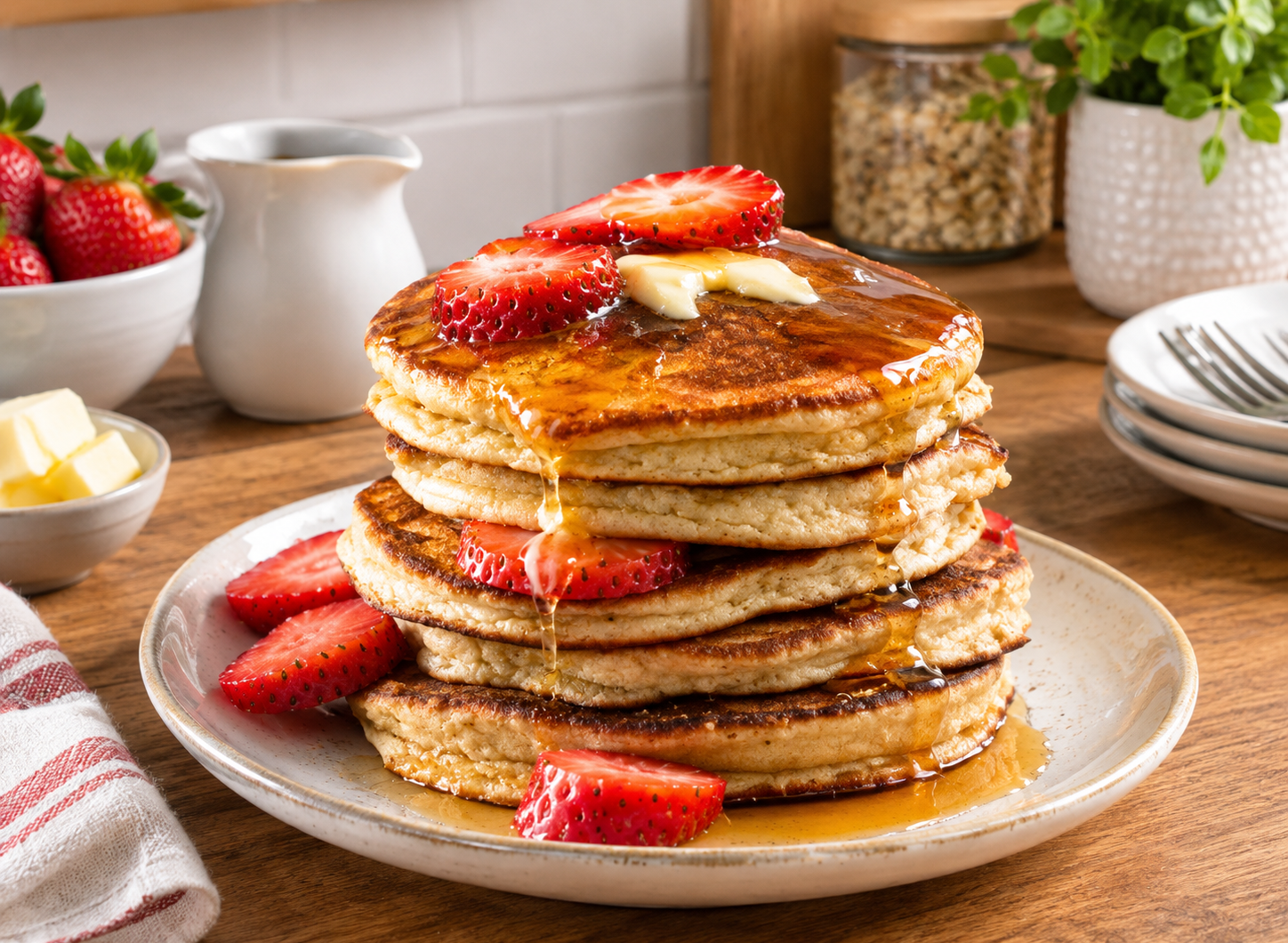
Keto Pancakes (5 Ingredients)
These thick and fluffy keto pancakes are made with simple ingredients and contain no grains or regular sugar. They are naturally gluten-free, easy to prepare, and contain only 3 grams of net carbs per serving.
4
servings2
minutes7
minutes192
kcal3
g9
minutesIngredients
1 cup almond flour
1/4 teaspoon salt
2 large eggs, room temperature
1 tablespoon keto maple syrup
1/4 cup water
Directions
- Add the almond flour, salt, room-temperature eggs, keto maple syrup, and water to a mixing bowl. Whisk everything together until the batter is smooth and evenly combined.
- Grease a large non-stick skillet or pan and place it over medium heat. Allow the pan to heat before adding the pancake batter.
- Spoon large portions of the batter into the skillet, keeping the pancakes fairly small so they are easier to turn. Cover the pan immediately with a lid.
- Cook for 3 to 4 minutes, or until the edges begin to bubble and the pancakes have started to set. Carefully remove the lid and gently flip each pancake.
- Cover the pan again and cook for another 1 to 2 minutes until the pancakes are cooked through. Repeat with the remaining batter.
- Serve the keto pancakes warm. Store leftovers in the refrigerator for up to 7 days, freeze them for up to 6 months, or reheat them in the microwave for 30 seconds or in a non-stick pan until warm.
Nutrition Facts
- Calories: 192kcal
- Fat: 16g
- Carbohydrates: 6g
- Fiber: 3g
- Protein: 9g


)