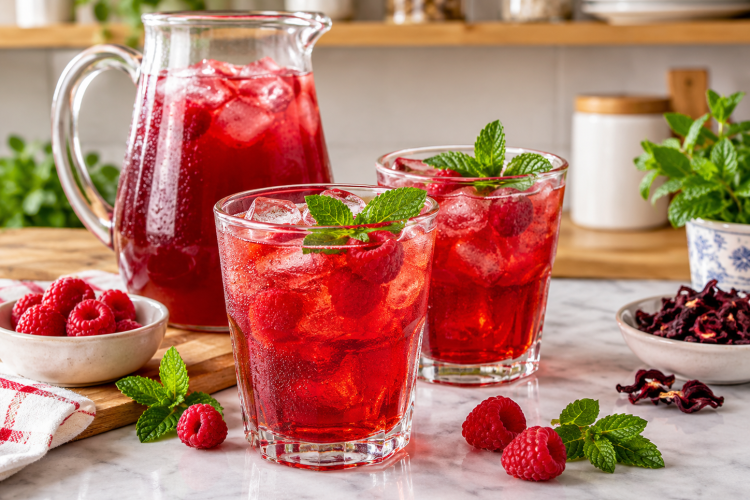
Hibiscus tea is a colorful herbal drink made from dried hibiscus flowers and water. It has a beautiful ruby-red color, a naturally tart flavor, and a light floral aroma that makes it enjoyable both hot and cold. This easy hibiscus tea recipe requires only two main ingredients and a few minutes of preparation. After chilling, the tea becomes a refreshing beverage that you can serve over ice, sweeten to taste, or garnish with fresh fruit and herbs.
Hibiscus tea is popular in many parts of the world because of its distinctive flavor and simple preparation. It is made using the dried calyces of Hibiscus sabdariffa, a plant also known as roselle. Although commonly called hibiscus flowers, these colorful parts of the plant are especially valued for making drinks, syrups, jams, and other recipes. When soaked in water, they release their rich red color and create a tangy infusion that resembles cranberry juice.
One of the best things about homemade hibiscus tea is its versatility. You can prepare a pitcher in advance and keep it refrigerated for convenient servings throughout the day. During warmer weather, serve it over ice for a cooling drink. When temperatures drop, prepare a hot cup using boiling water and dried hibiscus flowers. Since the basic recipe contains no tea leaves, it is naturally caffeine-free, making it an appealing alternative to traditional black or green tea.
Why You Will Love This Hibiscus Tea Recipe
This simple hibiscus tea recipe is ideal for anyone who enjoys refreshing homemade drinks without complicated ingredients. You only need dried hibiscus flowers and cold filtered water to create the basic infusion. There is no need for special equipment, expensive ingredients, or lengthy cooking. A jar or pitcher and a fine-mesh strainer are enough to prepare a flavorful drink that looks attractive when served in clear glasses.
Another reason to enjoy hibiscus tea is its naturally bold flavor. Unlike plain water, it has a fruity tartness that makes every sip interesting. You can drink it without sweetener if you prefer a sharper taste, or add honey, sugar, maple syrup, or agave to balance its acidity. Fresh mint and raspberries are optional garnishes that make the finished beverage look beautiful and provide complementary flavors.
This recipe is also easy to customize for different occasions. Make a pitcher for family meals, serve it at summer gatherings, or prepare a single cup whenever you want a refreshing herbal drink. You can even add sparkling water for a fizzy version or cinnamon for a warmer, spiced flavor. With a simple preparation method and plenty of serving options, hibiscus tea is a practical addition to your homemade beverage collection.
Ingredients for Homemade Hibiscus Tea
The ingredients for this recipe are simple and easy to understand. Dried hibiscus flowers provide the characteristic color and flavor, while cold filtered water creates the infusion. Ice, sweetener, mint, and raspberries are used when serving, depending on your preferences. Keeping the ingredient list short allows the natural taste of hibiscus to remain the main focus.
Dried Hibiscus Flowers
Dried hibiscus flowers are the most important ingredient in this recipe. They give the tea its deep red color, tangy flavor, and subtle floral aroma. Choose food-grade dried hibiscus that is specifically intended for preparing beverages. You can often find it in herbal tea sections, international grocery stores, specialty food shops, or online retailers.
For this recipe, measure one-quarter cup of dried hibiscus flowers. This amount creates a flavorful infusion when combined with four cups of water. The strength and final color may vary depending on the flowers’ quality and freshness. If you enjoy a stronger taste, allowing the mixture to steep overnight can help develop a deeper color and more pronounced flavor.
Cold Filtered Water
Four cups of cold filtered water are used to prepare the tea. Water allows the dried hibiscus to release its natural color and flavor during the chilling process. Filtered water is a good choice when you want a clean-tasting beverage, although safe drinking water can also be used.
The cold-water method is especially convenient because it does not require boiling a large pot of water. Simply combine the ingredients in a jar or pitcher and place the container in the refrigerator. While the mixture rests, the water gradually becomes bright red and develops the tart flavor associated with hibiscus tea.
Ice for Serving
Ice makes chilled hibiscus tea particularly refreshing. Fill your glasses with ice before pouring in the strained tea. Because melting ice gradually dilutes the beverage, you may prefer a stronger infusion if you plan to let the glasses sit for a while. Keeping the main pitcher refrigerated until serving also helps maintain the tea’s flavor.
Optional Sweetener
Hibiscus tea has a naturally tart taste, so some people prefer to add a little sweetness. Sugar, honey, maple syrup, and agave are all suitable options for this recipe. The amount depends on your personal preference, and you can leave the sweetener out entirely if you enjoy the natural flavor.
When preparing a pitcher, add sweetener gradually and stir thoroughly before tasting. If you are serving several people, you can leave the tea unsweetened and allow everyone to sweeten their own glass. This makes the drink easier to customize and helps prevent the natural hibiscus flavor from becoming overwhelmed by sugar.
Fresh Mint and Raspberries
Fresh mint and raspberries are optional garnishes that complement the fruity taste of hibiscus tea. Mint contributes a refreshing aroma, while raspberries add a delicate berry flavor and an attractive pop of color. Add them to individual glasses just before serving for the best presentation.
These ingredients are not required to prepare the infusion. If you prefer a simple two-ingredient hibiscus tea, you can skip the garnishes and still enjoy the drink’s distinctive color and tartness.
How to Make Hibiscus Tea
Making hibiscus tea at home involves combining the dried flowers with water, chilling the mixture, and straining it before serving. The cold-infusion method is easy to follow and requires very little hands-on preparation. Allow enough time for the flowers to release their color and flavor before serving the finished tea over ice.
Step 1: Add the Hibiscus Flowers
Place one-quarter cup of dried hibiscus flowers in a clean one-quart jar or medium-sized pitcher. Choose a container large enough to hold the flowers and four cups of water comfortably. A glass container is useful because you can easily see the color develop as the tea steeps.
Check the dried flowers before using them to make sure they are clean and suitable for preparing drinks. There is no need to crush or grind them. The water will gradually extract their color and flavor during the chilling process.
Step 2: Pour in the Water
Add four cups of cold filtered water to the jar or pitcher. Stir gently so that the flowers are evenly distributed throughout the water. Some flowers may float at first, while others may settle toward the bottom. This is normal and will not prevent the infusion from developing.
Cover the container before placing it in the refrigerator. Covering the tea helps keep it clean and prevents it from absorbing odors from other foods. Once the water and flowers are combined, the initial preparation is complete, and the refrigerator will do the rest of the work.
Step 3: Chill the Tea
Place the covered container in the refrigerator for at least 20 minutes, or until the liquid becomes bright red. During this time, the dried hibiscus releases its natural pigments and develops its tart, fruity flavor. The exact color and intensity depend on the type of hibiscus used and the length of steeping.
For a deeper color and stronger flavor, allow the tea to chill overnight. This is a convenient option when you want to prepare the drink ahead of time. If you prefer a lighter taste, begin checking the infusion after the recommended minimum chilling time and adjust future batches to suit your preferences.
Step 4: Strain the Infusion
Place a fine-mesh strainer over a clean bowl or pitcher. Slowly pour the tea through the strainer to separate the liquid from the softened hibiscus flowers. Allow the liquid to drain naturally so that you collect as much of the tea as possible.
Once strained, discard the used flowers or compost them if appropriate. The finished liquid should have a vibrant red color and a clean, tart flavor. If small particles remain in the tea, strain it again using a clean fine-mesh strainer before serving.
Step 5: Sweeten and Serve
Fill four glasses with ice and pour the strained hibiscus tea into each glass. Taste the tea before adding sweetener. If you prefer a milder flavor, stir in a little honey, sugar, maple syrup, or agave until it reaches your desired sweetness.
Finish the glasses with fresh mint leaves and raspberries if desired. Serve immediately while the tea is cold and refreshing. If you have any tea remaining, keep it in a covered pitcher in the refrigerator and pour additional servings as needed.
How to Make Hot Hibiscus Tea
Although cold hibiscus tea is an excellent choice for warm weather, the same dried flowers can be used to make a comforting hot drink. This method is useful when you want a single serving without waiting for a pitcher to chill. Place one tablespoon of dried hibiscus flowers in a mesh tea infuser or heat-safe cup, then pour one cup of boiling water over them.
Allow the flowers to steep for approximately five minutes before removing the infuser or straining the tea. If you prefer a stronger flavor, you can adjust the steeping time slightly. Keep in mind that a longer infusion may taste more intense and tart, so taste it before deciding whether to continue steeping.
Serve the hot tea in a mug and add honey or lemon juice if desired. Both additions are optional, and the drink can be enjoyed without sweetener. This simple preparation creates a warm, fruity herbal beverage that is easy to make whenever you want something different from ordinary tea or coffee.
Easy Ways to Customize Hibiscus Tea
Sparkling Hibiscus Tea
For a fizzy variation, pour chilled hibiscus tea into a glass filled with ice and top it with sparkling water. Adjust the amount of sparkling water according to how strong you want the flavor to be. A small squeeze of lime juice can add a bright citrus note that complements the natural tartness of hibiscus.
Add the sparkling water just before serving to preserve its bubbles. This version works well for summer lunches, outdoor gatherings, and occasions when you want a refreshing drink without complicated preparation.
Cinnamon Hibiscus Tea
Cinnamon gives hibiscus tea a warm, aromatic flavor. To make this variation, add a cinnamon stick to the jar or pitcher before placing the tea in the refrigerator. Allow it to infuse alongside the hibiscus, checking the taste occasionally so the spice does not overpower the drink.
Remove the cinnamon stick when the flavor reaches your preference. You can serve this variation chilled or prepare a hot infusion using the same combination. Starting with one cinnamon stick allows the fruity hibiscus flavor to remain noticeable while adding a gentle spice note.
Hibiscus Tea with Honey and Lemon
Honey and lemon are simple additions for anyone who wants a sweeter, citrus-flavored drink. Stir a small amount of honey into the tea and add lemon juice gradually until the flavor is balanced. If the tea is very cold, dissolve the honey in a little warm water first to make mixing easier.
This combination works particularly well when you want to soften the tartness without adding too much sweetness. Since hibiscus already has a sharp flavor, start with a small amount of lemon and taste as you go.
Common Mistakes to Avoid
Using the Wrong Amount of Hibiscus
The ratio of flowers to water affects the color and taste of the finished beverage. Too few flowers may create a weak infusion, while too many can make it excessively tart. Start with one-quarter cup of dried hibiscus flowers and four cups of water, then adjust future batches according to your taste.
Not Steeping the Tea Long Enough
Hibiscus needs sufficient time to release its color and flavor. If the tea looks pale or tastes too mild, allow it to steep longer in the refrigerator. An overnight infusion is a convenient option when you prefer a stronger drink.
Adding Too Much Sweetener
Adding a large amount of sweetener at once can overwhelm the natural flavor of hibiscus. Begin with a small quantity, stir well, and taste before adding more. This is especially helpful when preparing a large pitcher for people with different preferences.
Frequently Asked Questions
Is Hibiscus Tea Caffeine-Free?
Yes. Hibiscus tea prepared with dried hibiscus flowers and water is naturally caffeine-free. If you mix it with black tea, green tea, or another caffeinated ingredient, the finished beverage may contain caffeine.
Can I Drink Hibiscus Tea Without Sugar?
Yes. Hibiscus tea can be enjoyed without any added sweetener. Its naturally tart flavor is refreshing on its own, especially when served cold over ice. You can also add fresh mint for extra aroma.
Can I Use Hibiscus Tea Bags?
Yes, tea bags containing hibiscus can be used to make a similar beverage. Follow the package instructions and adjust the quantity and steeping time according to the desired strength. Loose dried hibiscus flowers are used in this particular recipe.
Why Is My Hibiscus Tea Too Tart?
Hibiscus has a naturally sharp flavor, so some tartness is expected. To make it milder, add a little water or sweetener and stir well. You can also serve it over ice or combine it with sparkling water.
Can I Prepare Hibiscus Tea in Advance?
Yes. You can prepare the infusion ahead of time, strain it, and store it in a covered container in the refrigerator. Add ice and fresh garnishes when serving to keep the drink flavorful and attractive.
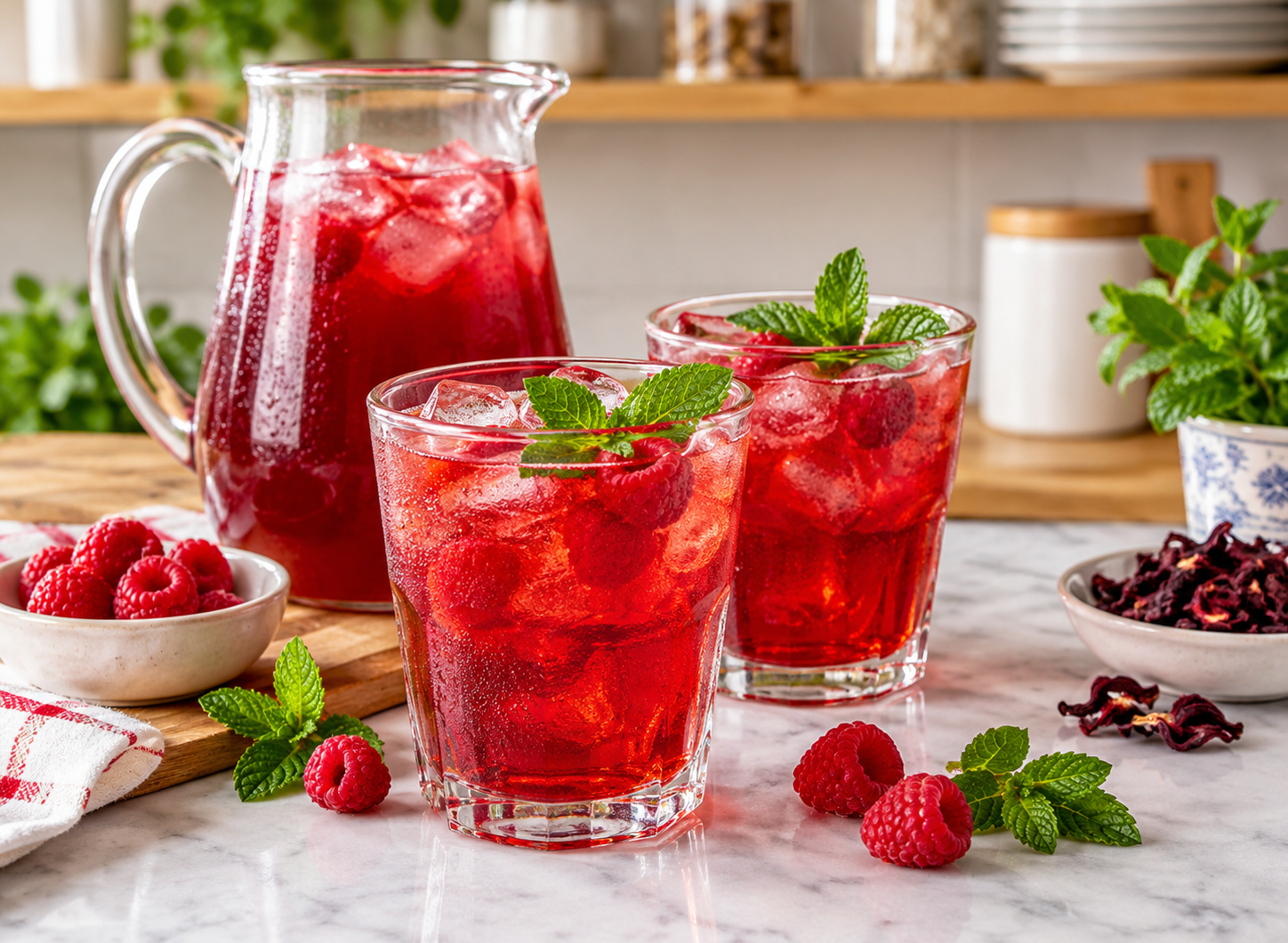
Healthy Hibiscus Tea
A bright, tart, caffeine-free herbal drink that can be served chilled over ice.
4
servings25
minutes25
minutesIngredients
¼ cup dried hibiscus flowers
4 cups cold filtered water
Ice, for serving
Sweetener of choice, such as sugar, maple syrup, honey, or agave, optional
1 small bunch fresh mint, for garnish
¼ cup raspberries, for garnish
Directions
- Place the dried hibiscus flowers in a one-quart jar or medium pitcher.
- Add the cold filtered water and stir to combine.
- Cover and refrigerate for at least 20 minutes, until the tea becomes bright red. For a deeper color and stronger flavor, chill overnight.
- Pour the tea through a fine-mesh strainer into a clean pitcher to remove the hibiscus flowers.
- Fill four glasses with ice and pour in the strained tea. Sweeten to taste if desired.
- Garnish with fresh mint leaves and raspberries before serving.


