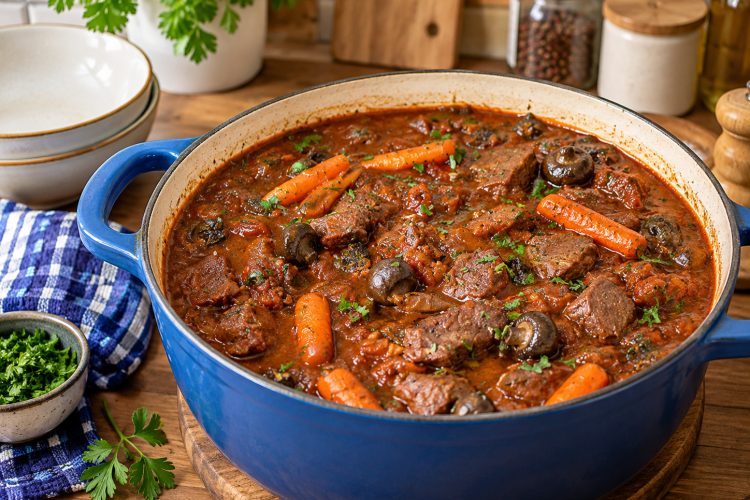
Beef stew over mashed potatoes is a hearty comfort food dinner made with tender beef, red wine, carrots, fresh thyme, black olives, and a rich, savory broth. Served over creamy garlic mashed potatoes, this homemade meal combines slow-cooked meat with smooth potatoes for a satisfying main course. The beef simmers in a Dutch oven until tender, while the cooking liquid develops a deep flavor that complements the vegetables and creates a delicious sauce.
This beef stew recipe is perfect for family dinners, weekend meals, or occasions when you want something filling and flavorful. Although the cooking process takes several hours, most of the time is spent allowing the beef to simmer gently. Marinating the meat ahead of time adds flavor and makes the preparation easier. When the stew is ready, spoon it over freshly prepared mashed potatoes for a comforting meal that everyone can enjoy.
Why You Will Love This Beef Stew Recipe
Tender Beef and Rich Sauce
The slow cooking process is one of the most important parts of this recipe. Beef stew meat, often cut from chuck roast or round steak, becomes tender when cooked gently for an extended period. The red wine, beef broth, and tomato paste combine to create a rich sauce that coats the meat and vegetables. Browning the beef before simmering also adds depth and helps develop the savory flavor of the finished stew.
Creamy Garlic Mashed Potatoes
Garlic mashed potatoes provide a smooth, creamy base for the stew. Russet potatoes are especially suitable because they mash into a fluffy texture that absorbs the flavorful broth. Heavy cream adds richness, while gently warmed garlic gives the potatoes a pleasant savory taste. When the stew is spooned over the potatoes, the sauce settles into the center, bringing the two components together in every serving.
Perfect for Make-Ahead Meals
This recipe makes eight servings, making it useful for family dinners and planned leftovers. The beef marinates for 18 to 24 hours before cooking, and the finished stew can be prepared a day or two in advance. Reheating it gently allows you to serve a flavorful homemade dinner without completing every step at the last minute. For the best texture, prepare the mashed potatoes separately and serve them fresh.
Ingredients for Beef Stew Over Mashed Potatoes
Beef Stew Meat and Red Wine
Beef stew meat provides the hearty texture and rich flavor that make this recipe satisfying. Cut the beef into pieces approximately one inch in size so they cook evenly. Cuts such as chuck roast or round steak are suitable because they benefit from slow cooking. Before browning, pat the marinated beef dry with paper towels to help the surfaces develop a flavorful crust.
Dry red wine forms an important part of the marinade and sauce. Cabernet Sauvignon, Syrah, or Merlot are suitable options. The wine combines with the beef juices during cooking, adding depth to the broth. It is used to marinate the beef with the vegetables and herbs, so reserve the entire marinade instead of discarding it after removing the meat.
Onion, Garlic, Orange Zest, and Thyme
Onion and garlic provide the savory foundation of the stew. As the ingredients cook, their flavors blend with the wine and beef broth. Orange zest adds a subtle citrus aroma that balances the richness of the meat without making the dish sweet. Use the colored outer peel of the orange and avoid including too much of the bitter white pith.
Fresh thyme brings an earthy herbal flavor that complements the beef and red wine. The recipe uses three sprigs, which release their aroma during marinating and slow cooking. These ingredients work together to create a flavorful broth without requiring complicated seasoning. The long cooking time allows the flavors to develop gradually and blend with the tender beef.
Carrots, Tomato Paste, and Black Olives
Baby carrots add natural sweetness, color, and texture to the stew. They are convenient to use and soften during simmering while retaining enough structure to complement the beef. Tomato paste contributes concentrated tomato flavor and helps create a rich, dark sauce. Cooking it briefly in the Dutch oven until its color deepens develops its flavor before the remaining ingredients are added.
Black olives add a distinctive savory note to the recipe. The original ingredient list calls for four ounces of medium whole, pitted black olives. They can be omitted if preferred, but they complement the wine-based broth and tomato paste. Beef broth supplies additional liquid and reinforces the beef flavor, while olive oil, kosher salt, and freshly ground black pepper are used during cooking and seasoning.
Ingredients for Garlic Mashed Potatoes
The mashed potatoes require six large russet potatoes, half to two-thirds of a cup of heavy cream, four peeled and halved garlic cloves, kosher salt, and freshly ground black pepper. Russet potatoes create a light, fluffy mash, while heavy cream gives the finished potatoes a smooth and rich consistency. Yukon Gold potatoes can also be used if you prefer a creamier texture.
Warming the garlic cloves in the cream allows their flavor to infuse the liquid before it is mixed with the potatoes. Add the warm cream gradually when mashing so you can control the consistency. Properly drained potatoes are important because excess water can make the finished mash too loose and dilute the flavor.
How to Make Beef Stew Over Mashed Potatoes
Step 1: Marinate the Beef
Cut any oversized pieces of beef into approximately one-inch chunks and place them in a large container or food-safe sealable bag. Add the red wine, diced onion, crushed garlic, orange zest, baby carrots, and fresh thyme sprigs. Arrange the ingredients so the beef is surrounded by the marinade, then cover the container or seal the bag securely.
Refrigerate the beef for 18 to 24 hours. If using a bag, press out excess air and place it inside a bowl to catch any possible leaks. Keep the meat refrigerated throughout the marinating period. Once the marinating time is complete, reserve the wine, vegetables, and herbs because they will become part of the stew.
Step 2: Season and Brown the Beef
Remove the beef from the marinade and pat it dry with paper towels. Keep the reserved marinade and vegetables nearby. Season the meat with kosher salt and freshly ground black pepper. The beef may appear darker or slightly purplish after soaking in red wine, which is a normal result of marinating.
Heat olive oil in a large Dutch oven over medium-high heat. Add the beef in small batches, leaving space between the pieces. Brown the meat on all sides, then transfer it to a plate. Repeat until all the beef has been browned. Avoid overcrowding the pot because the meat needs enough space to brown rather than steam in its own moisture.
Step 3: Prepare the Tomato Paste
Once the beef has been removed, pour a small amount of reserved wine or beef broth into the Dutch oven. Stir and scrape the bottom of the pot to loosen the browned bits left behind by the meat. These flavorful bits help create a rich foundation for the finished sauce.
Add the tomato paste and cook it over low heat, stirring frequently until it changes from bright red to a deeper reddish-brown color. Add small splashes of wine or broth if the paste starts sticking. Taking time to cook the tomato paste helps develop its flavor and gives the beef stew a deeper, more savory taste.
Step 4: Add the Remaining Ingredients
Add the black olives to the tomato paste, then pour in the reserved marinade with its vegetables and herbs. Return the browned beef to the pot and stir everything together. Pour in the beef broth, ensuring that the meat is surrounded by the cooking liquid.
Bring the mixture to a boil over medium-high heat and skim away any foam that rises to the surface. Reduce the heat until the stew reaches a gentle simmer. This gradual transition from boiling to simmering helps the ingredients cook evenly and prevents the liquid from reducing too quickly.
Step 5: Simmer Until Tender
Partially cover the Dutch oven and simmer the stew over low heat for approximately two to three hours. Check the pot occasionally to make sure the liquid is bubbling gently and the ingredients are not sticking to the bottom. If the liquid becomes too low before the beef is tender, add a little additional beef broth.
The stew is ready when the beef is fork-tender and the sauce has thickened. Cooking time may vary depending on the size of the pieces and the cut of beef. Test a piece before finishing the stew, and continue simmering if it remains firm. Slow, gentle cooking allows the meat to soften while the wine, vegetables, and seasonings develop a balanced flavor.
How to Make Creamy Garlic Mashed Potatoes
Step 6: Boil the Potatoes
Peel the russet potatoes and cut them into quarters. Bring a large pot of salted water to a boil, add the potatoes, and cook until they are very tender when pierced with a fork. Cutting the potatoes into similarly sized pieces helps them cook evenly and makes them easier to mash.
Drain the potatoes thoroughly after cooking. Allowing excess moisture to escape helps prevent watery mashed potatoes. Russet potatoes work particularly well because their starchy texture produces a fluffy mash that pairs nicely with the thick beef stew sauce.
Step 7: Warm the Garlic Cream
While the potatoes cook, place the heavy cream and peeled, halved garlic cloves in a small saucepan. Warm the mixture over low heat until it reaches a gentle simmer, then remove it from the heat. Let the garlic steep in the warm cream so its flavor spreads throughout the liquid.
Keep an eye on the saucepan because cream can rise quickly as it heats. Avoid boiling it vigorously. The warm garlic cream will blend more easily into the potatoes, helping create a smooth texture and a balanced flavor.
Step 8: Mash and Season
Transfer the drained potatoes to a large bowl or food processor. Add some of the warm garlic cream and mash until smooth. You can also use an electric mixer or a traditional potato masher. Add more cream gradually until the potatoes reach your preferred consistency.
Season with kosher salt and freshly ground black pepper. Avoid overmixing, as excessive processing can make potatoes sticky or gluey. The finished mash should be creamy enough to spoon into bowls while remaining thick enough to hold the stew and its sauce.
Serving and Storage Tips
How to Serve the Stew
Spoon the warm garlic mashed potatoes into individual bowls and create a shallow well in the center. Add a generous serving of beef stew, including tender beef, carrots, black olives, and plenty of sauce. The potatoes absorb some of the broth, creating a delicious combination of creamy texture and rich flavor.
For extra color, garnish with fresh Italian parsley if desired. Serve immediately while the stew and potatoes are warm. Homemade bread is also a good accompaniment for soaking up the remaining sauce. This recipe makes eight servings, so it works well for family dinners, guests, and meal planning.
Make-Ahead and Reheating Tips
Prepare the beef stew one or two days in advance if needed. Store it in a covered container in the refrigerator and reheat it gently over low heat, stirring occasionally until thoroughly hot. If the sauce thickens during storage, add a small amount of beef broth to loosen it.
For the best results, make the mashed potatoes close to serving time. If preparing them ahead, keep them covered and reheat gently with a little warm cream if they become too thick. Store the potatoes separately from the stew so each component retains its best texture.
Common Mistakes to Avoid
Crowding the Pan
Adding too much beef to the Dutch oven at once can cause the meat to steam rather than brown. Cook the beef in batches, leaving space between the pieces. Proper browning builds flavor and helps create a richer broth.
Cooking at Too High a Temperature
Keep the stew at a gentle simmer after bringing it to a boil. Excessive heat can reduce the liquid too quickly and make it harder to control the cooking process. Allow enough time for the beef to become tender before serving.
Adding Too Much Cream at Once
When preparing mashed potatoes, add the warm garlic cream gradually. This gives you better control over the texture and prevents the potatoes from becoming too loose. Drain the potatoes thoroughly and stop mixing as soon as they are smooth.
Frequently Asked Questions
Can I make beef stew over mashed potatoes ahead of time?
Yes. The stew can be prepared one or two days in advance and reheated gently. Store it separately from the mashed potatoes for easier reheating and better texture.
What cut of beef works best?
Beef stew meat from chuck roast or round steak is suitable because these cuts benefit from slow cooking and become tender over time.
Why is the beef still tough?
The beef may need more cooking time. Continue simmering gently until the meat is fork-tender. Cooking time depends on the cut and size of the pieces.
Can I use Yukon Gold potatoes?
Yes. Yukon Gold potatoes can replace russet potatoes. They create a creamy mash, while russet potatoes generally produce a fluffier texture.
How can I thicken the sauce?
Allow the stew to simmer until the liquid reduces naturally. Cooking the tomato paste before adding the remaining ingredients also helps create a rich, flavorful sauce.
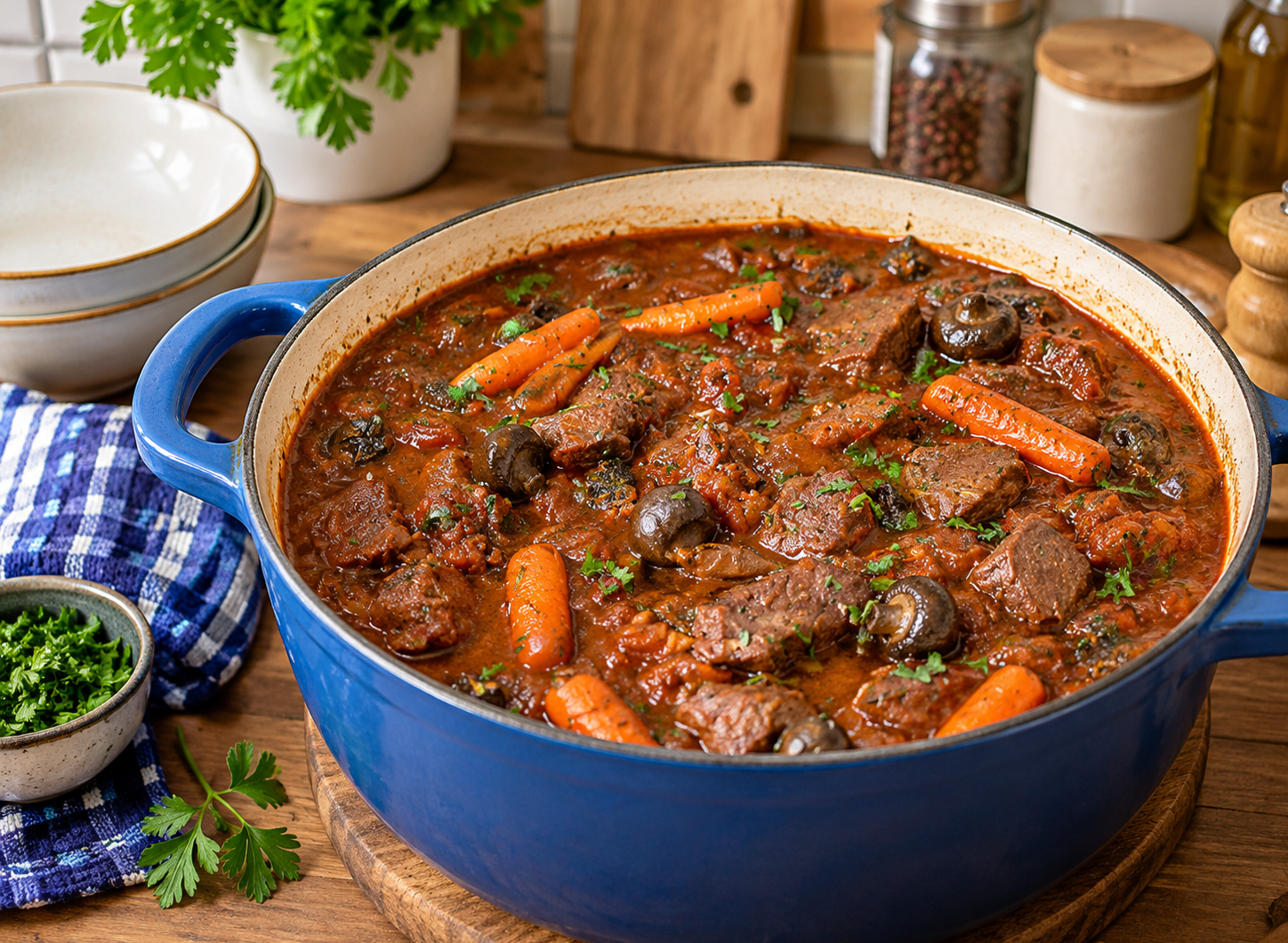
High Protein Beef Stew With Mashed Potatoes
Tender beef stew simmered in dry red wine with carrots, onion, garlic, fresh thyme, tomato paste, and black olives. Served over creamy garlic mashed potatoes, this hearty Dutch oven dinner is ideal for family meals and make-ahead dinners.
8
servings30
minutes3
hours529
kcal3
hours30
minutesIngredients
- For the Beef Stew
3 lbs beef stew meat, cut into 1-inch chunks
1 bottle good dry red wine, approximately 3 cups
1 yellow or white onion, diced
3 cloves garlic, crushed
Zest of 1 orange
1 lb baby carrots
3 sprigs fresh thyme
Olive oil, for browning the stew meat
Kosher salt and freshly ground black pepper, to taste
6 oz tomato paste
4 oz medium whole, pitted black olives
4 cups beef broth
- For the Creamy Garlic Mashed Potatoes
6 large russet potatoes, peeled and quartered
1/2–2/3 cup heavy cream
4 cloves garlic, peeled and halved
Kosher salt and freshly ground black pepper, to taste
Directions
- Prepare and Marinate the Beef
- Cut the beef into approximately 1-inch pieces, trimming any oversized chunks.
- Place the beef in a large container or food-safe bag. Add the red wine, onion, crushed garlic, orange zest, carrots, and thyme sprigs.
- Seal and refrigerate for 18–24 hours. If using a bag, place it inside a bowl to catch possible leaks.
- Cook the Beef Stew
- Remove the beef from the marinade and pat it dry with paper towels. Reserve the marinade and vegetables.
- Season the beef with kosher salt and freshly ground black pepper.
- Heat olive oil in a large Dutch oven over medium-high heat. Brown the beef in batches, then transfer it to a plate.
- Deglaze the pot with a little reserved wine or broth, scraping up the browned bits.
- Add the tomato paste and cook over low heat until it turns a deeper reddish-brown, stirring and adding small splashes of liquid if necessary.
- Add the black olives, reserved marinade and vegetables, and browned beef. Stir to combine.
- Bring the mixture to a boil, skim off any foam, and reduce the heat to a gentle simmer.
- Add the beef broth and cook partially covered over low heat for 2–3 hours, until the beef is tender and the stew has thickened.
- Make the Garlic Mashed Potatoes
- Bring a large pot of salted water to a boil. Add the peeled, quartered potatoes and cook until fork-tender.
- Meanwhile, warm the heavy cream and halved garlic cloves in a small saucepan over low heat until gently simmering. Remove from the heat.
- Drain the potatoes thoroughly and mash or process them with some of the warm garlic cream. Add more cream as needed to achieve a smooth consistency.
- Season with kosher salt and freshly ground black pepper.
- Serve
- Spoon the garlic mashed potatoes into serving bowls, creating a well in the center.
- Ladle the hot beef stew over the potatoes and serve immediately. Garnish with fresh Italian parsley if desired.
Nutrition Facts
- Calories: 529kcal
- Fat: 13g
- Carbohydrates: 52g
- Fiber: 6g
- Sugar: 6g
- Protein: 38g


