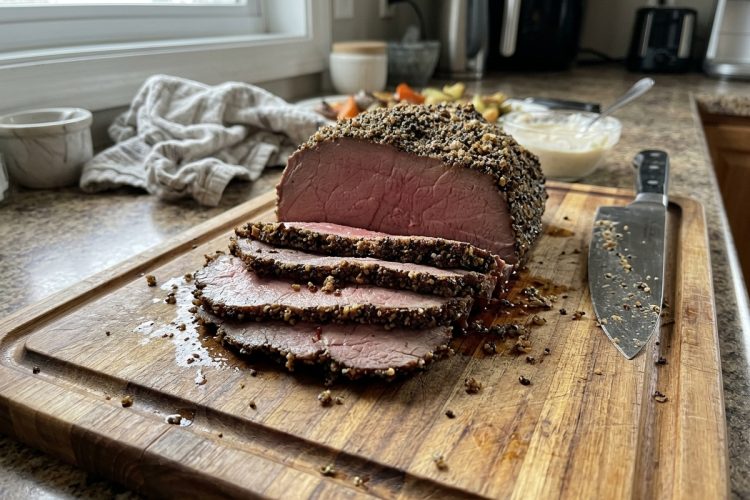
Pepper Crusted Roast Beef is a delicious oven-roasted beef recipe that combines a thick, crunchy peppercorn coating with tender, juicy meat. Made with only four ingredients, this simple roast is perfect for family dinners, Sunday lunches, holiday celebrations, and special occasions. The preparation is straightforward, and the oven does most of the work. With a little olive oil, coarse sea salt, crushed peppercorns, and a quality beef roast, you can create an impressive main course without complicated seasoning or lengthy preparation.
The highlight of this recipe is the contrast between the bold, peppery crust and the tender beef inside. Roasting the meat uncovered on a rack allows hot air to circulate around the surface, helping the exterior develop a flavorful texture. There is no need for constant basting, repeated temperature adjustments, or covering the roast during cooking. Instead, you can prepare the beef, place it in the oven, and monitor its internal temperature as it cooks.
A three-pound roast generally provides enough meat for four to six people, depending on portion sizes and the side dishes you serve. Pair it with roasted vegetables, a fresh green salad, or your favorite low-carb sides for a satisfying dinner. The leftovers are equally useful, making this peppercorn-crusted beef a practical choice when you want a meal that can be enjoyed in several different ways.
Why This Pepper Crusted Beef Recipe Works
Only Four Simple Ingredients
One of the biggest advantages of this pepper crusted roast beef recipe is its short ingredient list. You do not need a complicated marinade, a collection of dried herbs, or a homemade sauce to create a flavorful roast. The beef provides the main flavor, while olive oil helps the seasoning stick, coarse sea salt enhances the savory taste, and crushed peppercorns form the distinctive outer coating.
Because there are so few ingredients, choosing good-quality beef and distributing the seasoning evenly become especially important. A suitable lean roast can produce delicious results when cooked carefully. The coarse peppercorns also give the meat an attractive appearance, making it look like a special-occasion dish even though the preparation requires very little effort.
A Thick, Crunchy Peppercorn Crust
The peppercorn coating gives this roast its signature flavor and texture. Coarsely crushed peppercorns create a more noticeable crust than finely ground pepper, adding a little crunch to each slice. As the beef roasts uncovered, the surface is exposed to the oven’s dry heat, helping the coating develop without becoming soaked in cooking juices.
For the best coverage, press the crushed peppercorns gently onto every side of the oiled beef. Pay attention to the ends, where seasoning can easily be missed. An even coating means that the flavor is distributed throughout the roast rather than concentrated only on the top. If you prefer a milder pepper flavor, you can remove the finest pepper particles before seasoning the meat.
A Convenient Main Course
Although roast beef looks impressive when presented on a serving platter, the cooking process is relatively simple. After seasoning the meat, place it on a roasting rack and allow the oven to do the work. You will not need to turn the roast repeatedly or baste it throughout cooking. Checking the internal temperature near the expected finishing time helps you decide when it is ready.
This straightforward method makes the recipe suitable for both experienced cooks and beginners. You can prepare the side dishes while the beef cooks and arrange everything on the table before carving. Allowing the roast to rest before slicing is another important step because it gives the meat time to settle and makes it easier to cut into neat portions.
Ingredients for Pepper Crusted Roast Beef
Top Sirloin or Another Lean Beef Roast
The original recipe uses three pounds (1⅓ kilograms) of top sirloin or another lean beef roast. Top sirloin is a practical choice because it offers a rich beef flavor and can remain tender when cooked carefully. It is also a useful option for feeding several people without requiring a particularly expensive cut of meat.
Sirloin tip and eye of round can also be used, while beef tenderloin is another alternative. Each cut has its own texture, shape, and cooking characteristics. A thicker roast will usually take longer to cook than a thinner piece of the same weight. Choose a roast with a reasonably even shape to encourage more consistent cooking, and trim away any thick outer fat layer if desired.
Extra Virgin Olive Oil
One tablespoon of extra virgin olive oil helps the salt and crushed peppercorns adhere to the surface of the beef. Spread it in a thin, even layer over the entire roast, including the ends and sides. You only need enough oil to coat the meat lightly; adding a large amount will not improve the peppercorn crust.
The oil also helps the seasonings spread evenly instead of falling away when the beef is moved to the roasting rack. Since the recipe contains no additional sauces or marinades, this small amount of olive oil plays an important role in preparing the exterior for roasting.
Extra Coarse Sea Salt
The recipe calls for one to one and a half tablespoons of extra coarse sea salt. Larger salt crystals provide a more noticeable texture and complement the crushed peppercorns. The amount can be adjusted within the original range according to your preference, but distribute it evenly to avoid overly salty sections.
Coarse salt also enhances the natural savory flavor of beef. Sprinkle it over the oiled surface before applying the peppercorns, then gently press it into place. Because the roast is a substantial piece of meat, seasoning the ends and sides is just as important as seasoning the top.
Crushed Peppercorns
Two tablespoons of crushed peppercorns provide the defining flavor of this dish. You can use all black peppercorns or a mixture of different colors. Black peppercorns offer a bold, familiar pepper flavor, while a mixture of peppercorn colors can give the crust a slightly different appearance.
For the best texture, use coarsely crushed peppercorns rather than fine pepper powder. You can crush them with an adjustable pepper mill or place them inside a sturdy plastic bag and gently break them apart with the flat side of a meat mallet. Aim for broken pieces rather than a completely powdered consistency.
How to Make Pepper Crusted Roast Beef in the Oven
Step 1: Prepare the Beef Roast
Begin by checking the outside of the beef and removing any thick fat layer you do not want to retain. Pat the meat dry with paper towels, making sure to reach the sides and ends. Drying the surface helps the oil and seasonings adhere more effectively and prepares the exterior for roasting.
Place the beef on a clean cutting board or plate while you prepare the seasonings. Keep the preparation area clean, and wash your hands and utensils after handling raw meat. Avoid rinsing the beef under running water, as splashes can spread bacteria around the kitchen.
Step 2: Apply the Olive Oil and Salt
Rub one tablespoon of extra virgin olive oil over the entire surface of the roast. Use your hands or a suitable utensil to spread it evenly without leaving large pools of oil in one area. The aim is to create a light coating that helps the seasoning stay in place.
Next, sprinkle the extra coarse sea salt over the beef. Work around the roast so the top, bottom, sides, and ends receive a balanced amount. Gently press the salt onto the surface before moving to the peppercorns. Taking a little extra care at this stage helps produce a more consistent flavor in every slice.
Step 3: Coat the Beef With Crushed Peppercorns
Spread the crushed peppercorns over the oiled and salted roast. Press them gently against the meat so they stick, filling in any areas where the surface remains exposed. Rotate the roast as necessary to cover all sides, including the narrow ends.
A thick, even coating is what gives this dish its recognizable appearance. If the peppercorns are too finely crushed, the flavor may become more intense than expected, so use larger pieces when possible. Once the beef is fully coated, transfer it carefully to the roasting rack, keeping as much seasoning on the surface as possible.
Step 4: Arrange the Roast on a Rack
Place the seasoned beef on a roasting rack positioned over a shallow roasting pan. The rack raises the meat above the bottom of the pan, allowing hot air to move around the underside and sides. This arrangement helps the roast cook more evenly and reduces the chance of the bottom sitting directly in accumulated juices.
Let the seasoned beef stand for approximately 30 minutes while the oven preheats to 375°F (190°C). Keep food safety in mind during preparation, and do not leave raw beef at room temperature for more than two hours in total, or one hour when the surrounding temperature exceeds 90°F (32°C). If the meat has already spent time outside the refrigerator, account for that time.
Step 5: Roast the Beef Uncovered
Once the oven reaches 375°F (190°C), place the roasting pan inside. Insert an oven-safe meat thermometer into the thickest central part of the roast if you have one, following the thermometer manufacturer’s instructions. Keep the beef uncovered throughout cooking to expose the peppercorn coating to the oven’s dry heat.
A three-pound roast may take around 50 to 60 minutes under the original recipe’s cooking conditions, but the actual time can vary considerably. The thickness of the beef, its temperature before cooking, the accuracy of the oven, and the shape of the roasting pan all influence how quickly it cooks. Begin checking the internal temperature as the expected cooking time approaches rather than relying entirely on the clock.
Step 6: Check the Internal Temperature
A meat thermometer is the most dependable way to check roast beef doneness. Insert the probe into the center of the thickest section without touching the pan. Check the temperature carefully, and allow additional cooking time if necessary.
The original recipe describes lower finishing temperatures for a pink center and relies on carryover cooking during the resting period. However, for food safety, the USDA recommends cooking whole beef roasts to at least 145°F (62.8°C), followed by a minimum three-minute rest. This is the safer benchmark to follow, particularly when serving people who may be more vulnerable to foodborne illness.
How to Keep the Roast Tender and Juicy
Avoid Guessing by Cooking Time Alone
Cooking time is useful for planning, but it cannot guarantee the correct doneness. Two beef roasts weighing three pounds may cook at different rates if one is thick and compact while the other is long and narrow. An oven that runs hotter or cooler than its setting can also change the result.
Begin checking the temperature before the estimated cooking time ends. This gives you time to adjust without leaving the roast in the oven longer than necessary. A thermometer is particularly helpful when preparing beef for guests, since it allows you to make decisions based on the actual temperature rather than the appearance of the crust.
Let the Meat Rest Before Slicing
Once the roast has reached the appropriate internal temperature, transfer it to a clean carving board. Allow it to rest for at least 15 minutes before cutting. During this time, the internal temperature may continue to rise as heat moves from the outside toward the center, and the meat becomes easier to carve.
Avoid tightly wrapping the roast in foil if maintaining a crisp peppercorn crust is your priority. Trapped steam can soften the coating. After resting, use a sharp knife to slice the beef across the grain. Cutting against the direction of the muscle fibers helps produce more tender, easier-to-chew slices.
Best Side Dishes for Pepper Crusted Roast Beef
Low-Carb and Keto-Friendly Sides
Pepper crusted roast beef pairs well with roasted broccoli, cauliflower, zucchini, asparagus, or Brussels sprouts. These vegetables complement the savory beef without overpowering its peppercorn flavor. A fresh green salad is another excellent option, especially when dressed with a light vinaigrette that adds freshness and balances the richness of the meat.
The beef itself contains very few carbohydrates when prepared with the four original ingredients. If you are following a keto or low-carb eating plan, choosing vegetable-based sides can help keep the overall meal within your preferred carbohydrate range. Remember that sauces, dressings, and additional ingredients may change the nutritional value of the complete meal.
Traditional Roast Dinner Sides
For a classic dinner, serve the beef with mashed potatoes, roasted potatoes, steamed carrots, or green beans. These familiar accompaniments create a satisfying plate suitable for Sunday lunch, holiday meals, or a family gathering. You can also arrange the sliced beef on a large platter surrounded by vegetables to create an attractive centerpiece.
Choose side dishes according to the occasion and the preferences of your guests. Since the peppercorn crust already provides plenty of flavor, simple sides are often enough. You do not need a heavily seasoned sauce or elaborate accompaniment to make the roast feel complete.
Recipe Notes and Frequently Asked Questions
Can I use a different cut of beef?
Yes. Top sirloin is the recommended cut, but sirloin tip, eye of round, and beef tenderloin can also be used. Each cut has a different thickness and texture, so cooking times may change. Use a meat thermometer to determine when the roast has reached the appropriate internal temperature.
How can I make the peppercorn crust less spicy?
Sift the crushed peppercorns through a fine-mesh sieve and remove the smallest particles and powder. The larger pieces still create a textured coating but may produce a less intense pepper flavor throughout the crust. You can also crush the peppercorns ahead of time, although this method does not guarantee a particular level of heat.
Why should I use a roasting rack?
A rack allows hot air to circulate around more of the beef’s surface. It helps prevent the underside from sitting directly in cooking juices and encourages more even roasting. A shallow pan beneath the rack collects drippings and makes handling the roast easier.
Can I prepare this recipe ahead of time?
You can trim the beef and prepare the crushed peppercorns in advance. Keep raw beef refrigerated until you are ready to season and cook it. If you season the meat ahead of time, refrigerate it safely rather than leaving it on the counter. Allow only the necessary preparation time at room temperature before roasting.
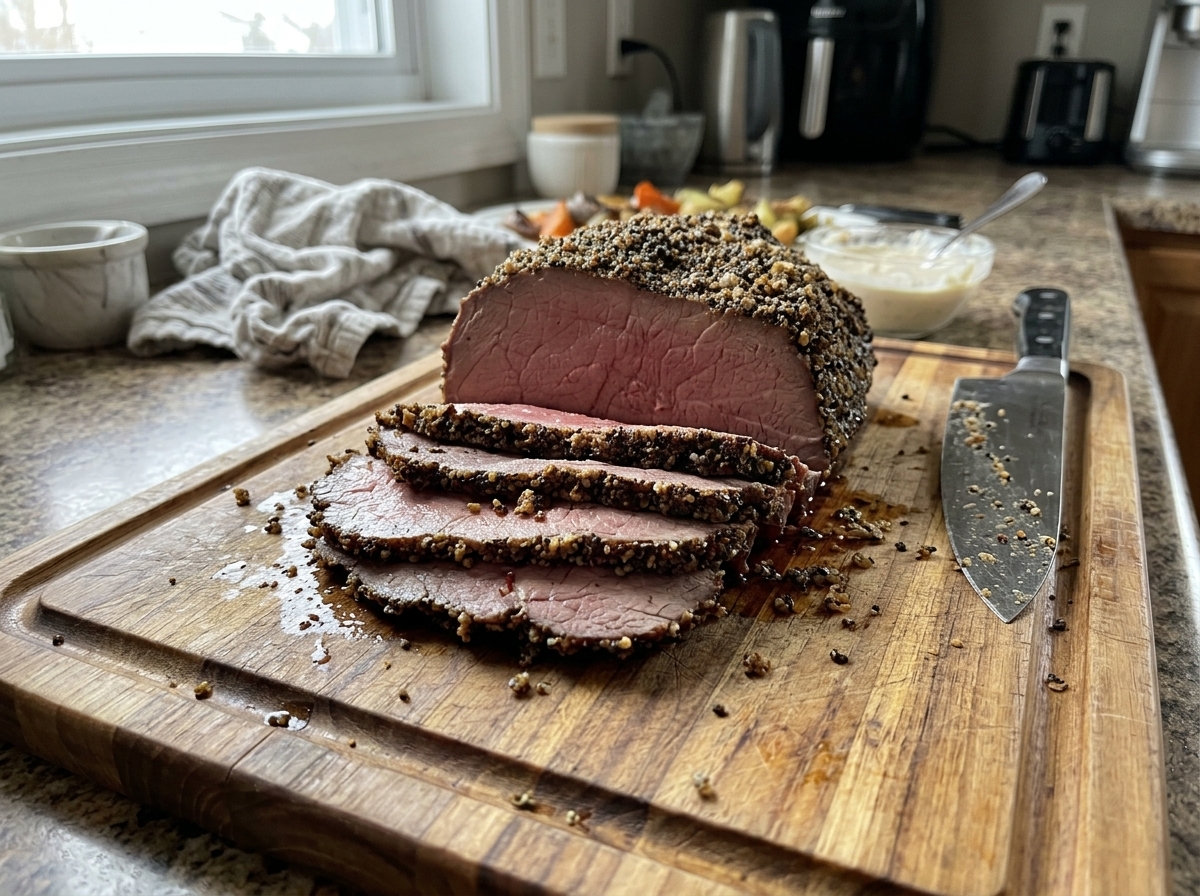
High Protein Pepper Crusted Roast Beef Steak Recipe
This easy Pepper Crusted Roast Beef features tender, juicy beef covered in a thick, crunchy peppercorn crust.
6
servings10
minutes50
minutes420
kcal1
hourIngredients
3 pounds (1⅓ kg) top sirloin or other lean beef roast
1 tablespoon extra virgin olive oil
1 to 1½ tablespoons extra coarse sea salt
2 tablespoons crushed peppercorns (all black or mixed colors)
Directions
- Prepare the beef:
Remove the outside fat layer, if any, and pat the roast dry with paper towels. - Add olive oil:
Rub the extra virgin olive oil evenly over the entire surface of the beef. - Season with salt:
Sprinkle the coarse sea salt over the roast, covering all sides. - Apply the peppercorns:
Press the crushed peppercorns firmly onto the meat until the entire surface is evenly coated. - Prepare the oven:
Place the beef on a roasting rack over a shallow roasting pan. Let it stand for approximately 30 minutes while preheating the oven to 375°F (190°C). Keep food safety in mind and refrigerate the beef if it would otherwise remain at room temperature too long. - Roast the beef:
Insert a meat thermometer into the thickest part of the roast and place it in the preheated oven, uncovered. - Check doneness:
Cooking time will vary depending on the thickness of the meat and oven temperature. For food safety, cook the roast to at least 145°F (62.8°C), followed by a minimum three-minute rest. - Rest the roast:
Transfer the beef to a clean carving board and rest for approximately 15 minutes before slicing. - Slice and serve:
Cut the beef against the grain into even slices and serve with your favorite vegetables or salad.
Notes
- Keep the roast uncovered during cooking to help develop a crisp peppercorn crust.
- For a milder pepper flavor, sift the crushed peppercorns and use the larger pieces instead of the fine powder.
- Cooking time is approximate and depends on the roast’s thickness, starting temperature, and oven accuracy.
- Avoid tightly covering the roast with foil during resting, as trapped steam may soften the crust.
- Refrigerate leftovers promptly in an airtight container and use within 3–4 days.
- Enjoy leftover beef cold in sandwiches and salads, or reheat until it reaches 165°F (74°C).
Nutrition Facts
- Calories: 420kcal
- Fat: 15.6g
- Carbohydrates: 0.9g
- Protein: 69.1g


